

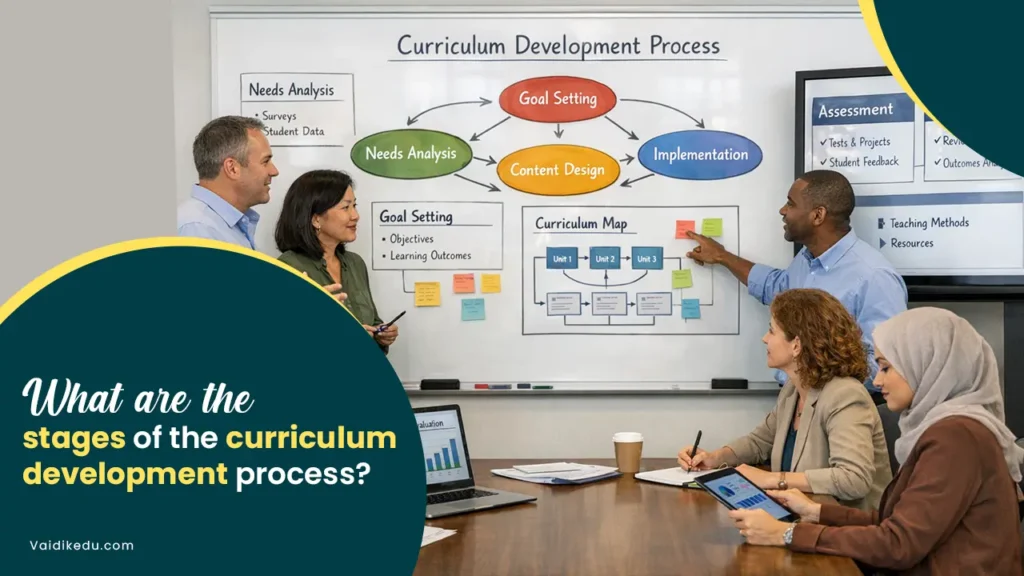
Curriculum design is not simply about what chapters are included in a textbook or how many exams can be taken in a year. The curriculum is a thoughtful, layered process that influences how students learn, develop, and relate to their surroundings.
Behind every subject taught in a classroom lies a set of carefully planned decisions from identifying what students need to determine how best to prepare it and later evaluating how well it worked.
If you’re a teacher wanting the big picture, an education student who wishes to know the basics, or simply an interested observer of how schools think about their curriculum, understanding the curriculum development process will give you concrete evidence of how learning develops in layers.
In this blog, we’ll explore each stage of the curriculum development process step by step and see how each contributes to crafting effective, engaging, and relevant learning experiences. Let’s get started.
What Is Curriculum Development?
Curriculum development is the thoughtful process of planning what students will learn, how they will know it, and how their progress will be measured. It goes far beyond just putting together a list of topics or chapters. Instead, it’s about building a meaningful learning experience that supports growth, curiosity, and long-term understanding.
This process involves making intentional choices about what content is relevant, which teaching methods will work best, and how to assess whether students are learning. Educational goals, student needs, social changes, and future job demands shape it.
Curriculum development can occur at many levels from national education boards designing a framework for the entire country to individual schools or teachers customising lessons for a specific class. Regardless of the level, the purpose remains: to create a structured and practical path that helps students progress.
In simple terms, curriculum development is the behind-the-scenes planning that makes teaching focused and learning meaningful.
Key Principles Guiding Curriculum Development
When educators set out to develop a curriculum, they aren’t just piecing together lessons. They’re crafting an experience that has the power to shape how students think, question, and grow. While every curriculum may differ in content, specific core ideas consistently guide how it’s built.
Understanding Who The Learners Are
Before anything else, it’s essential to know who’s in the classroom. What do the students already know? What interests them? What challenges might they face? A strong curriculum starts with real people in mind, not just numbers or test scores.
Keeping Learning Connected To Real Life
Learners are likely to stay engaged when they feel the learning is purposeful. Whether using math to budget for weekly purchases or employing reading skills to understand their environment, the best learning occurs when they can see connections between their learning and real-life situations.
Creating Space for Everyone
No two students are the same. Some need extra time, others learn best through visuals, and some prefer group work. A thoughtful curriculum accommodates all kinds of learners and is built with flexibility so that every student has a fair shot at success.
Working Towards A Bigger Purpose
Every lesson should serve a larger goal. Whether preparing students for further studies, teaching values like empathy, or helping them become better problem-solvers, each part of the curriculum should contribute to something greater than memorising facts.
Staying Open To Change
What worked five years ago might not work today and that’s okay. Education isn’t static. A good curriculum leaves room for updates. If something isn’t working or a better method comes along, teachers should be able to adapt.
Looking At What’s Working And What’s Not
Finally, a solid curriculum includes room for reflection. Are students grasping the ideas? Are they engaged? Are teachers finding the materials helpful? Whether it comes from students, teachers, or parents, honest feedback helps improve the process over time.
Stage 1: Needs Analysis / Situational Analysis
Before building any curriculum, you need to step back and ask: What do the students need? This first stage is about understanding the learning environment, who the learners are, their current abilities, and what gaps exist in their knowledge or skills.
Teachers and curriculum planners begin by observing and listening. They solicit student feedback, network with other teachers, review previous performance data, and identify what is already being taught. Sometimes, the curriculum already exists but contains outdated concepts and ideas, and other times, it may need minor tweaks.
This stage is not rushed. It involves thoughtful reflection, honest feedback, and a clear look at what’s happening in the classroom and beyond. For example, if students struggle with writing or critical thinking, that’s a signal. Or if the job market is changing, and schools need to prepare students differently, that’s another clue.
Needs analysis lays the foundation. Without it, any curriculum would be based on guesswork. With it, the plan is rooted in real-world needs and ready to support learners and teachers from the beginning.
Stage 2: Setting Objectives And Goals
Once you’ve understood what the learners need, the next step is determining what the curriculum should help them achieve. This is where clear objectives come in. Think of them as the end goals of what students should be able to do, know, or understand by the time they’ve completed the course.
These goals aren’t pulled out of thin air. Student needs, education standards, and real-world expectations shape them. Whether improving reading skills, understanding basic math concepts, or learning to work in teams, each objective should serve a clear purpose.
Right now, the key is to get specific. Vague goals, like “students will be better writers,” don’t do much. On the other hand, a more effective goal might be “students will be able to write a detailed, structured paragraph with a strong topic sentence and details to support their writing.”
Reasonable goals also guide teachers. They support teachers who intentionally plan lessons and assess progress towards goals. Strong objectives guide the rest of the curriculum, like a compass for meaningful learning.
Stage 3: Designing The Curriculum
Now that the goals are in place, it’s time to map out how. This stage is about deciding what will be taught, in what order, and how the learning experience will unfold in the classroom.
It starts with choosing the content. What topics make the most sense? Which lessons will help meet the objectives set earlier? The content must be relevant, age-appropriate, and connected, not just a bunch of chapters thrown together.
Next comes the structure. Lessons are arranged with logically simple ideas first, then gradually moving to more complex ones. Educators also consider how to keep students engaged. Should the lesson include discussions? Group work? Real-life examples? What activities allow students to explore and apply what they’re learning?
Another essential part of this stage is accommodating all kinds of learners. That means including different types of materials, teaching strategies, and support systems so everyone regardless of learning style or ability has a fair chance to succeed.
This stage is where the curriculum starts to take shape. It’s like sketching out the blueprint of a house before building the thoughtful design here makes everything else run smoother.
Stage 4: Developing The Curriculum
Once the design is in place, it’s time to bring it to life. Ideas turn into actual teaching tools in this stage the lessons, activities, worksheets, assessments, and resources teachers and students use daily.
Lesson plans are created with clear instructions. Reading materials, presentations, and hands-on activities are developed to match the content and goals. Digital resources like interactive slides, videos, or online quizzes are selected or created if technology is used.
At this point, everything needs to be practical and ready to use. Teachers should be able to walk into a classroom, follow the plan, and know exactly what to do, and students should be able to engage with the material without confusion.
It’s also essential to test the materials before full-scale implementation. Sometimes, what works in theory, doesn’t always work in practice, so small pilot runs or teacher feedback during this stage can help fine-tune things.
In short, this phase is about building the toolkit that supports outstanding teaching. It turns the structure created earlier into something tangible, practical, and classroom-ready.
Stage 5: Implementation
This is where all the planning and preparation take form in action. The fully developed curriculum is now brought into the classroom. Teachers implement the materials, use the lesson plans, and lead students through the content.
But implementation isn’t just about following a script. It’s about adapting those lessons to real students in real-time. Teachers make judgment calls they might slow down if a topic is challenging or switch gears if students aren’t responding. Flexibility plays a significant role here.
Successful implementation often includes proper support. Teachers may need training to feel confident with new materials or methods, and schools might need to provide resources like access to technology, books, or extra time to make the curriculum work smoothly.
This stage is also a learning experience. It’s the first chance to see how the curriculum functions beyond theory. What engages students? What confuses them? What flows naturally, and what feels forced?
Implementation brings the curriculum to life, but it also opens the door for reflection and that’s where the next stage begins.
Stage 6: Evaluation And Feedback
Once the curriculum has been rolled out in classrooms, it’s essential to pause and ask How is it working? This stage is about looking closely at what’s going well and what might need to change.
Teachers observe how students respond. Are they engaged? Do they understand the material? Are they struggling in certain areas? These day-to-day experiences offer valuable insight. At the same time, student assessments, tests, projects, and discussions help show whether the learning goals are being met.
Evaluation is not simply about metrics or scores. Honest feedback from students and teachers also offers value. Maybe a lesson moved too quickly or didn’t go as they envisioned. Those details matter; details often point to larger changes that may need to occur.
This stage isn’t about assigning blame or pointing fingers. It’s about learning from the experience figuring out what’s working, what isn’t, and why. With that information, curriculum developers and educators can move on to the final step: improving it.
Stage 7: Revision and Continuous Improvement
No matter how well a curriculum is planned, there’s always room for improvement. This final stage involves using lessons learned during implementation and evaluation to make meaningful improvements.
Revisions may be minor, such as when a lesson needs additional minutes or a worksheet needs to become less complicated. Sometimes, revisions are larger. For example, the author may need to revise outdated topics or their instructional methods to meet the needs of the students.
This isn’t a one-time fix. A strong curriculum stays flexible over time. As society, technology, and education evolve, so should what we teach and how we teach it. Regular feedback from teachers, students, and parents helps keep the content fresh and relevant.
The revision also shows a commitment to quality. It means educators aren’t just checking boxes, they’re paying attention, responding to real classroom experiences, and always looking for ways to improve.
In the end, continuous improvement ensures the curriculum doesn’t just survive, it thrives.
Conclusion
Curriculum design isn’t simply arranging a list of topics and planning lessons. It is a multi-layered process involving many steps, from knowing learners to reflecting and growing. Focusing on purpose from needs assessment to revision is essential for developing meaningful learning experiences in each step.
A well-developed curriculum doesn’t just tell teachers what to teach, it gives them direction, purpose, and the flexibility to respond to their students’ needs. It helps students connect with their learning and prepares them for challenges beyond the classroom.
At its essence, curriculum development reflects human beings’ aspirations, challenges, and possibilities. When we thoughtfully and carefully engage in the work involved in curriculum development, we can impact people’s lives, not just their lessons.
Frequently Asked Questions
It is generally a collaborative endeavour. Teachers, school leaders, subject area specialists, and sometimes parents and students are involved. Each person contributes a different lens of experiences and perspectives, which helps produce a more rounded and realistic curriculum.
They evaluate students’ responses through test scores and consider their engagement, participation, and understanding of the lesson. At the same time, they reflect on the instructor’s experience: Did the lesson unfold or flow? Did the students seem confused or curious? These considerations provide information for future versions.
Not at all. Curriculum planning is used in training programs, colleges, corporate learning setups, and online courses anywhere structured learning occurs. The process might look slightly different, but the core idea is to help people learn effectively.
Because no matter how well something is planned, there’s always a difference between how it looks on paper and how it works in practice. Feedback from students and teachers helps spot gaps, refine lessons, and keep the curriculum practical and impactful.