


The changing landscape of education has made traditional textbook teaching and syllabus completion insufficient for learners’ needs. Educators on the global stage are coming to realise that teaching isn’t about what is being taught but more about what students can do with what they have learned.
This move in education aligns with the Learning Outcome-Based Curriculum Framework (LOCF), which focuses on putting student abilities and the use of knowledge in real-world situations at the centre of the educational learning process.
A Learning Outcome-Based Curriculum Framework is a structured approach to curriculum design that places learner achievements not just content delivery at the centre of educational planning and assessment. It emphasises clear, measurable outcomes that students are expected to achieve by the end of a course or program. These outcomes guide what is taught, how it’s taught, and how learning is assessed.
In contrast to conventional models that tend to emphasise content coverage, LOCF aligns all aspects of the curriculum instructional strategies to assessments with desired learning outcomes. This outcome-centred approach results in higher student motivation, skill mastery, and preparation for the real world, making education more relevant and effective.
As education systems strive to meet the demands of the 21st century employability, critical thinking, or lifelong learning, LOCF offers a coherent framework that aligns academic programs with national education goals, industry expectations, and global standards.
Whether you’re an educator, curriculum designer, or policymaker, understanding how to implement a learning outcome-based framework is essential for delivering quality education that truly empowers learners.
Before we explore how a learning outcome-based curriculum functions, it’s essential to understand what learning outcomes are and why they matter.
Learning outcomes are straightforward statements outlining expectations for what a student is expected to know, understand, or be able to do after a lesson, course, or learning program.
They are essentially a directional compass for teachers and learners; they are situated expectations that clarify roles, define understanding thresholds, and focus teachers’ teaching on what matters most.
Understanding Learning Outcomes:
Learning outcomes are clear statements of what students should be able to do after completing a course or program. Instead of focusing on what’s being taught, outcomes focus on what’s learned and applied.
They help both teachers and students stay focused. Educators guide how lessons are planned and how learning is assessed. For students, they clarify what’s expected, making learning more purposeful.
Outcomes can target different areas:
- Knowledge (what students understand),
- Skills (what they can do),
- And Attitudes or Values (how they behave or think).
Well-crafted learning outcomes use action-oriented words like analyse, explain, create, or demonstrate. This makes them easy to assess and meaningful in real-world terms.
In short, learning outcomes set the direction for meaningful learning and help ensure that education leads to actual growth, not just completed syllabi.
Key Principles of Outcome-Based Education (OBE):
OBE is about teaching with purpose. Instead of focusing on what’s being taught, it centres on what students are expected to achieve by the end.
Here are the key ideas:
- Clear Goals: Learning begins with clearly defined outcomes. Everyone, teachers and students knows what the end goal is.
- Start with the End in Mind: Teaching and assessments are planned backwards from outcome to classroom activity.
- High Expectations for All: Every student is expected to succeed. The path may differ, but the goal remains the same.
- Flexible Learning Paths: Students can learn differently and at various paces. What matters is that they reach the outcome.
- Alignment Matters: Teaching methods, content, and assessments must all point to the same outcomes.
- Continuous Feedback: Learning is improved through regular feedback and reflection, not just final grades.
OBE is less about completing a syllabus and ensuring real, lasting learning.
Components of a Learning Outcome-Based Curriculum Framework (LOCF):
A well-structured outcome-based curriculum has several layers. Each plays a role in shaping what students should learn and achieve:
- Programme Outcomes (POs): Broad goals are set at the program level. They define what graduates should be capable of by the end of their degree, like critical thinking, ethical behaviour, or effective communication.
- Programme-specific outcomes (PSOs) are more focused and linked to a specific subject or discipline. For example, a science student might be expected to apply scientific reasoning or use lab tools effectively.
- Course Outcomes (COs) describe what a student should know or do after completing a course. They are precise, measurable, and tied to classroom content.
- Outcome Mapping: This is about alignment. COs feed into PSOs, and PSOs contribute to POs. This ensures that every part of the curriculum leads toward the larger educational goals.
These components ensure that learning is intentional, connected, and measurable at every level.
Designing a Learning Outcome-Based Curriculum:
Creating an outcome-based curriculum starts by shifting focus from what will be taught to what students should achieve. Here’s how it’s typically done:
1. Define Clear Objectives: Identify what the program aims to produce, what kind of graduate, with what abilities.
2. Frame Measurable Outcomes: At program, subject, and course levels, write outcomes using action verbs (like analyse, build, explain) so they can be assessed clearly.
3. Align Teaching with Outcomes: Choose content, activities, and teaching methods that directly support those outcomes. Every lesson should move students closer to the goal.
4. Build Matching Assessments: Design assessments that test whether students have achieved the outcomes, not just memorised facts.
5. Get Everyone Involved: Collaborate with faculty, industry experts, and students to ensure the curriculum remains relevant and practical.
6. Review and Refine: Regularly reflect on what’s working and what’s not. Update outcomes, content, and assessments as needed.
Implementation Strategies:
Putting a learning outcome-based curriculum into action takes thoughtful planning. Here are key ways to make it work effectively:
- Start Small: Don’t overhaul everything at once. Align a few courses or modules to outcomes, then expand gradually.
- Train the Teachers: Offer simple, practical workshops to help educators write outcomes, plan lessons, and design better assessments.
- Use Mapping Tools: A basic spreadsheet can help track which outcomes are covered and where gaps or overlaps might occur.
- Align Lessons and Assessments: Ensure classroom activities and tests link to the learning outcomes. If they don’t support the goal, they need to rethink.
- Encourage Feedback: Collect regular input from students and teachers. Adjust as needed implementation is not a one-time process.
- Keep Everyone Involved: Work as a team. Collaboration among faculty, administrators, and even students strengthens and smooths the system.
Successful implementation is less about speed and more about staying consistent, straightforward, and focused on real learning.
Benefits of LOCF (Learning Outcome Based Curriculum Framework):
Implementing LOCF changes how students learn, teachers teach, and institutions measure success. Here are some of the key benefits:
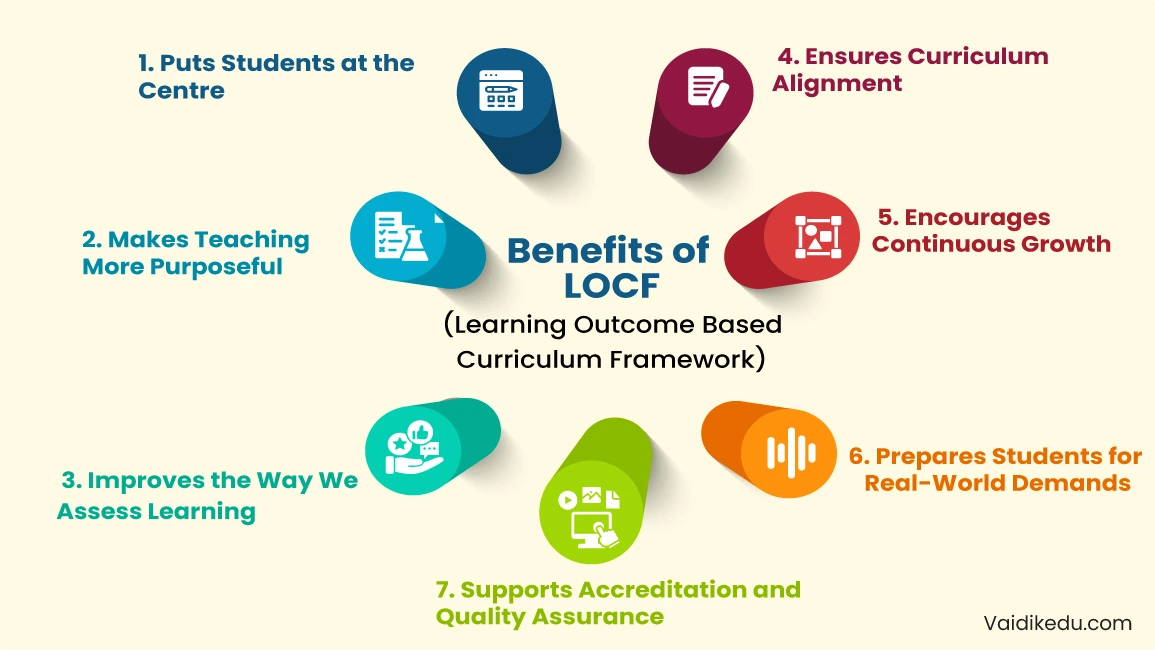
1. Puts Students at the Centre: LOCF shifts the focus from simply delivering content to ensuring students learn what matters. Students know the goals from the start, which helps them stay engaged and take more responsibility for their learning.
2. Makes Teaching More Purposeful: Teachers plan their lessons, activities, and assessments around clear outcomes. This brings focus and direction to their teaching and helps avoid unnecessary or unaligned content. Every class has a purpose.
3. Improves the Way We Assess Learning: Instead of relying only on traditional exams, LOCF encourages using various tools like projects, presentations, and real-world tasks. This ensures students are tested on practical understanding, not just memory.
4. Ensures Curriculum Alignment: Everything is connected from the course to the program level. Course outcomes support broader program goals, providing a well-structured and coherent learning path across subjects and semesters.
5. Encourages Continuous Growth: Assessment results and feedback help teachers and institutions see what’s working and what’s not. This regular review improves teaching, content, and even the outcomes themselves.
6. Prepares Students for Real-World Demands: Since outcomes are often skill-based and linked to real-world needs, students develop practical abilities like problem-solving, communication, teamwork, and critical thinking that employers seek.
7. Supports Accreditation and Quality Assurance: Institutions that follow LOCF have a clear record of what students are expected to learn and whether they’ve achieved it. This helps during audits, accreditation, and internal quality checks.
In short, LOCF creates a more organised, transparent, and student-focused approach to education, where everyone knows the goal and works together to achieve it.
Challenges And Solutions:
The Learning Outcome-Based Curriculum Framework (LOCF) has definite advantages, but implementing it might not always be easier said than done. Any significant behaviour change involves challenges for various reasons, both practical and because it consists of a shift in attitude. The thrilling aspect is that all the challenges can be resolved with forethought.
1. Resistance to Change: Many educators use traditional teaching methods. Changing long-established habits can feel uncomfortable.
Solution: Start by being, not pressure. Hold open discussions and training sessions to explain the “why” behind LOCF. Involve teachers early so they feel like contributors, not just followers of a new rule.
2. Difficulty Writing Clear Outcomes: Not everyone is familiar with writing measurable, action-oriented outcomes. It’s easy to fall back on vague goals like “understand” or “know.”
Solution: Offer practical workshops on outcome writing. Share examples, templates, and Bloom’s Taxonomy guides to help educators choose the correct verbs. Peer review and team collaboration can also improve clarity and consistency.
3. Misalignment Between Teaching and Assessment: Sometimes what’s taught doesn’t match what’s being assessed, or worse, what’s assessed doesn’t reflect the intended outcome.
Solution: Use curriculum mapping. It helps ensure that teaching content and assessment methods properly support each outcome. Regular departmental reviews can help spot and fix misalignments.
4. Time and Workload Pressure on Faculty: Adapting to LOCF requires time for planning, rewriting syllabi, updating assessments, and learning new tools. For many, this feels like added pressure.
Solution: Segment the process into phases. Start with a single course, or a single semester at a time. Promote team teaching and sharing of resources, as well as institutional support such as a reduced teaching load, during the implementation phases.
5. Challenges in Assessing Soft Skills: Outcomes like “develop leadership” or “demonstrate ethical behaviour” are essential, but tricky to measure.
Solution: Use a mix of self-assessments, peer reviews, reflective journals, and rubrics with qualitative indicators. While not always precise, they offer valuable personal and interpersonal growth insights.
6. Curriculum Becoming Outdated: Once outcomes are set, institutions sometimes treat them as permanent, even when industry demands and student needs evolve.
Solution: Build a culture of review. Schedule regular curriculum audits ideally every 1–2 years and involve faculty, industry professionals, and students in revising outcomes to keep learning relevant and future-focused.
7. Low Student Awareness of Outcomes: Students often don’t even know the learning outcomes, which leaves them unclear about what they’re working toward.
Solution: Talk about outcomes openly in class. Include them in course outlines, introduce them during lessons, and tie them back to assignments. When students know the goal, their effort becomes more focused.
8. Limited Access to Tools or Training: Some institutions lack the resources or digital tools to map and track outcomes effectively.
Solution: Start simple spreadsheets, charts, or printed templates can do the job. Gradually move to software or platforms as resources allow. The key is starting with intention, not perfection.
Yes, LOCF takes effort. However, most challenges are temporary and manageable with the proper support and mindset. And once the system settles in, it creates stronger learning environments, more capable students, and better educational outcomes.
Conclusion:
Shifting to a Learning Outcome-Based Curriculum Framework isn’t just about updating paperwork, it’s about changing how we view education at its core. It asks us to look beyond chapters and exams and instead focus on the question: What will students walk away with?
When outcomes are clear, teaching becomes more focused, learning becomes more meaningful, and assessment becomes more relevant. LOCF is not an easy fix or a quick solution; it will take effort, time, and working together.
However, once the LOCF is up and running, it brings focus, purpose, and openness to all education levels. Ultimately, it is about developing students who are educated, capable, thoughtful and ready for life. That is a noble goal.