

Imagine entering a classroom where all the students get what they need, no more cookie-cutter lesson plans or one-size-fits-all worksheets. Instead, the learning experience is customized, flexible, and even participatory.
It may sound futuristic. Well, if you have not been paying attention, it is not. With the emergence of Artificial Intelligence (AI), personalized learning is becoming very real.
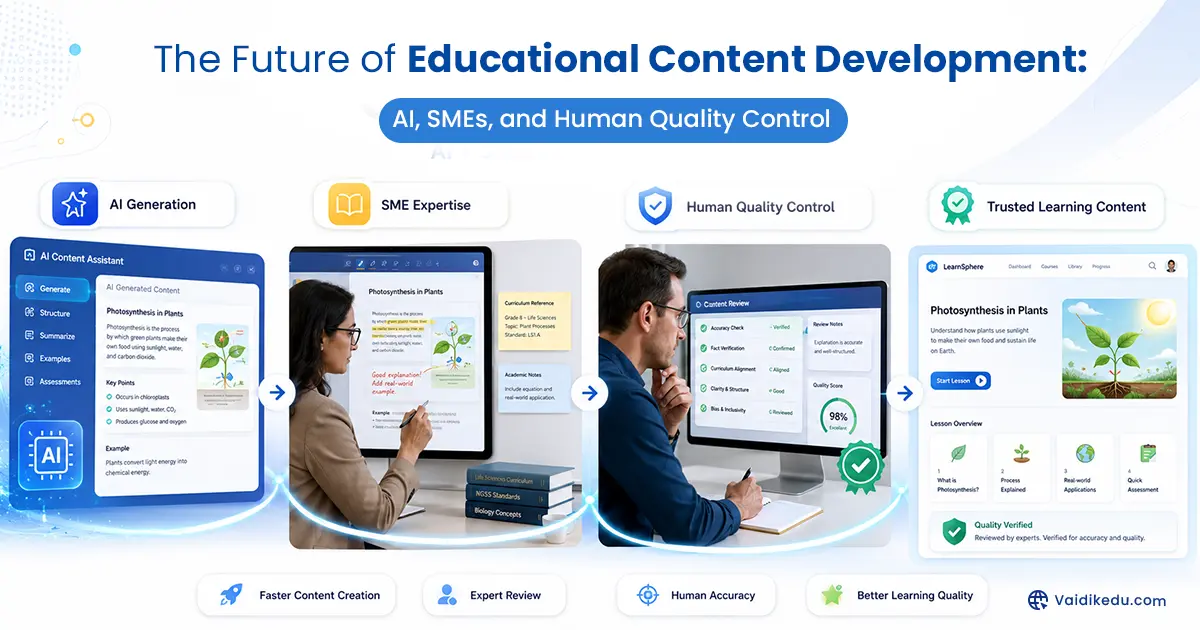
Instructional design the art and science of creating practical learning experiences has always been about putting the learner at the centre. But as classrooms evolve and learning goes digital, instructional designers are now called to think smarter, faster, and more creatively than ever. This is where AI steps in, not as a replacement but as a powerful assistant.
From creating lesson plans in minutes to analysing student performance in real time, AI transforms how educators design, deliver, and improve course instruction.
In this blog, we will discuss how AI is used in instructional design with some examples and what it holds for the future of education. Whether you are new to designing or just want to know more about how much AI can provide, this blog will assist you in learning how innovation and instruction find a balance.
Understanding Instructional Design
At its core, instructional design creates learning experiences that help people gain knowledge and skills effectively and efficiently.
Whether it’s a school lesson, an online course, or employee training, every piece of educational content needs to be structured in a way that makes sense to the learner, and that’s precisely what instructional designers do.
They rely on learning theories and frameworks like:
- The ADDIE Model (Analyse, Design, Develop, Implement, Evaluate) a step-by-step guide to creating effective instruction.
- Bloom’s Taxonomy – a classification system that helps structure learning objectives, from remembering basic facts to applying and creating complex concepts.
- Constructivist and learner-centric approaches – focusing on making learning active, meaningful, and personalised.
Traditionally, instructional design has been a human-driven process involving extensive research, planning, trial and error, and continuous refinement. But as education shifts towards digital platforms and learners become more diverse and tech-savvy, instructional designers face growing demands for more content, faster delivery, and deeper personalisation.
This is where AI provides new opportunities not by replacing the creative thinking available to humans or designers but by enabling creators to work more intelligently. This reduces manual, repetitive task workloads and increases focus on strategic effort, storytelling, and learner engagement.
The Role of AI in Education
Artificial Intelligence is no longer just the stuff of science fiction it’s already transforming how we learn, teach, and design education. But what exactly is AI doing in the world of education?
In simple terms, AI refers to computer systems that can perform tasks usually requiring human intelligence, such as understanding language, recognising patterns, solving problems, or making decisions. AI facilitates smarter, faster, and more adaptive learning in an educational context.
Types of AI Used in Education
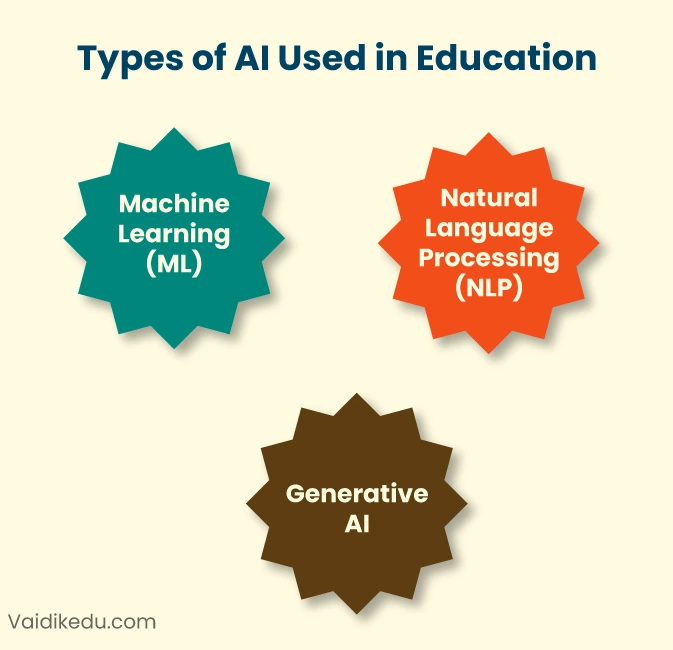
- Machine Learning (ML): These systems learn from data. For example, an AI platform can analyse student performance across lessons and adjust the difficulty level accordingly.
- Natural Language Processing (NLP) allows AI to understand, interpret, and respond to human language, enabling intelligent chatbots, writing assistants, and language tutors.
- Generative AI: Tools like ChatGPT or DALL·E can create original content such as lesson summaries, quizzes, visuals, or videos based on prompts.
Why AI Matters in Education
- Scalability: AI helps design personalized learning for hundreds or thousands of learners without burning out educators.
- Speed and efficiency: Tasks that used to take hours like analysing test results or creating assessments can now be done in minutes.
- 24/7 Support: AI tutors and chatbots can answer student questions anytime, providing instant feedback and support.
AI isn’t simply a fancy widget anymore; it is starting to become an essential piece of educational ecosystems. It optimises learning outcomes, grows teacher capacity, and allows instructional designers to create more engaging, inclusive, and informed learning experiences through data.
Applications of AI in Instructional Design
Artificial Intelligence is revolutionising the way instructional designers approach their craft. Rather than replacing human creativity, AI acts as a competent partner, enhancing speed, precision, and personalisation throughout the design process. Let’s look at how AI is practically applied in instructional design today.
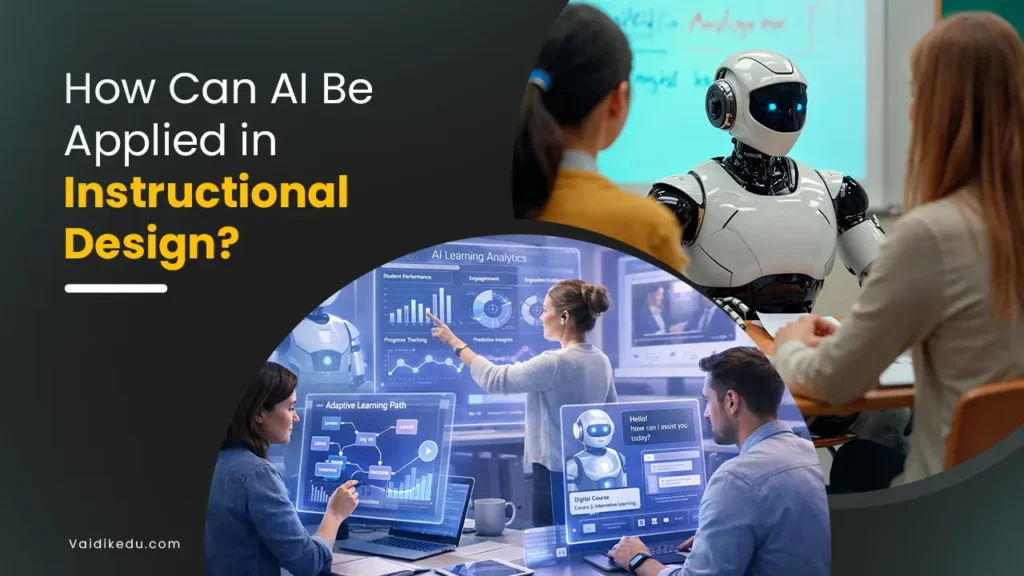
AI has some of the most exciting applications in creating customised learning pathways. Historically, you had to make assumptions about the learning needs of groups if you were an instructional designer. But now, you can design adaptive learning experiences and adjust in real time to the learner.
AI can make content recommendations and provide level or extra support based on students’ progress by analysing the number of quizzes completed, time spent on different modules, learner behaviours, and much more!
Many learning tools, such as DreamBox or Knewto, have already incorporated this adaptive learning system so that no two students experience a course quite the same way.
Another proper AI function is intelligent content creation. Apps like ChatGPT, Jasper, Canva AI, and Quizizz AI can create lesson plans, quizzes, assessment items, and multimedia objects in just a few minutes.
Rather than spending hours on everyday tasks, instructional designers can use this AI digital assistant to align their content to outcomes, think about the instructional strategies they’ll use, and plan for engagement.
For example, suppose an instructional designer wants multiple versions of a formative assessment. In that case, AI can produce the same group or level of questions with an instant variety of questions and save hundreds of hours of tedious work.
AI also plays a key role in learning analytics and insights. Instructional designers can now access real-time data on how learners interact with content, what’s working, confusing, and where learners drop off.
Using tools like Google Classroom Insights or LMS platforms like Moodle or Blackboard, designers can analyse learners’ engagement and learning outcomes and then dive deeper into that analysis to refine materials. Designing with evidence explicitly allows courses to be improved by being created intentionally and continually.
Furthermore, AI is driving the rise of virtual teaching assistants and chatbots, which allow learners to walk through content and provide on-demand support. These AI agents can respond to frequently asked questions, give clues while working through lessons, and suggest next steps for students who seem stuck without human effort.
For instance, Duolingo employs an AI-driven chatbot to replicate real-life communication (in a virtual setting) while providing dynamic instruction for language acquisition. Engaging and interactive ways of learning make learning easier and more responsive in online and self-paced learning contexts.
AI enhances gamification and simulation-based learning, and its capacity for personalisation allows for more dynamism, enjoyment, and engagement.
For example, an instructional designer can use AI to continuously adjust the difficulty of a game depending on current learner performance, recommend associated challenges, and even provide the engine for simulations that replicate decision-making in real-world scenarios. This is particularly valuable in healthcare, aviation, and business, where learners benefit from practising scenarios in a risk-free, intelligent environment.
Lastly, AI is making design instruction increasingly accessible and inclusive. AI applications include features such as live translation, auto-captioning, speech-to-text, and text-to-speech, helping to ensure content is reached by a larger, more diverse audience.
Learners with disabilities, non-native speakers, or those in multilingual environments can access content in ways that suit their needs, bringing equity into the centre of instructional design.
In all these ways, AI is helping instructional designers work smarter, not harder, offering tools and insights that were unimaginable just a few years ago. The result? Courses that are more efficient to design and more engaging, inclusive, and impactful for learners everywhere.
Real-World Examples and Tools
While the idea of using AI in instructional design may still sound futuristic to some, it’s already happening right now in classrooms, corporate training programs, and e-learning platforms around the world. Many popular tools and platforms are integrating AI to make learning smarter, more engaging, and highly personalised.
Take Coursera, for instance. The platform uses AI to recommend courses based on a learner’s past activity, interests, and performance. It also helps instructors identify which parts of a course need improvement by analysing where learners struggle the most.
Similarly, Khan Academy has introduced AI-powered assistants (like Khanmigo) that interact with students conversationally, offering hints, explanations, and feedback just like a human tutor would.
In the language learning space, Duolingo is a shining example. Its AI-driven algorithms adapt exercises based on user mistakes and successes, while its chatbots help learners practice real-life conversations in different contexts. The result is a fun, gamified, and highly effective learning experience tailored to each user.
Various AI-powered tools are now available for instructional designers to streamline content creation and improve design quality. ChatGPT can help draft lesson plans, write scripts, generate assessment questions, or even simulate student queries for training modules.
Canva AI allows designers to quickly create visual elements like infographics, slides, and social media graphics using innovative templates and text-to-image generation. If you want to generate video content, tools like Synthesia let you create AI-powered avatars that deliver scripted content in multiple languages, perfect for training or e-learning environments.
Another handy tool is Quizizz AI, which can generate quizzes from any text, topic, or concept in seconds. This is a game-changer for formative assessments, especially when time is short, or content needs to be adapted quickly.
For video creation and narration, Lumen5 or Pictory use AI to turn blog posts or scripts into engaging video lessons with visuals, voiceovers, and music.
These tools save time and open up new creative possibilities. For instructional designers, there is no longer a sacrifice between quality and speed, as we can now use quality and speed with the proper support from AI.
As technologies develop, we will increasingly have access to intuitive, collaborative, and powerful tools, enabling us to create more responsive, inclusive, and engaging learning experiences than ever before.
The Future of AI in Instructional Design
As we move beyond the world of artificial intelligence, we feel the increased role of AI in instructional design. New technologies will enable increasingly personalised, interactive, and accessible forms of learning. We will likely experience more innovative simulated experiences, adaptive challenges to inspire learners, and real-time feedback loops.
However, the future isn’t just about automation, it’s about balance. Instructional designers will still play a key role in shaping meaningful content, adding the human touch, and ensuring that AI tools are used responsibly. Instead of replacing creativity, AI will help free up time for deeper thinking, storytelling, and designing for impact.
We may also see new roles emerge like “AI-assisted learning architects” or “content curators” who blend tech and pedagogy to build more effective learning systems. As AI tools become more affordable and user-friendly, access will likely improve across schools, businesses, and communities.
In essence, the future of instructional design isn’t about choosing between humans and machines, it’s about working together to create more innovative, inclusive, and learner-centred experiences.
Conclusion
Artificial Intelligence is reshaping how we think about instructional design not by taking over, but by opening new doors. From personalising learning paths to speeding up content creation, AI offers real support where it’s most needed. But even as we welcome these tools, the role of the instructional designer remains essential.
Humans provide warmth, context, and empathy to learning; AI can help us, but people make it meaningful. By combining innovative technology and intentional design, we can create learning experiences that are efficient, meaningful, and inclusive.