

Businesses today need training solutions that are flexible, engaging, and easy to access. Employees often struggle to complete lengthy training programs because of demanding schedules, information overload, and limited time for professional development. Traditional training methods may also make it difficult for organizations to deliver timely knowledge updates across distributed teams.
This is why microlearning content development services are becoming increasingly important for modern organizations.
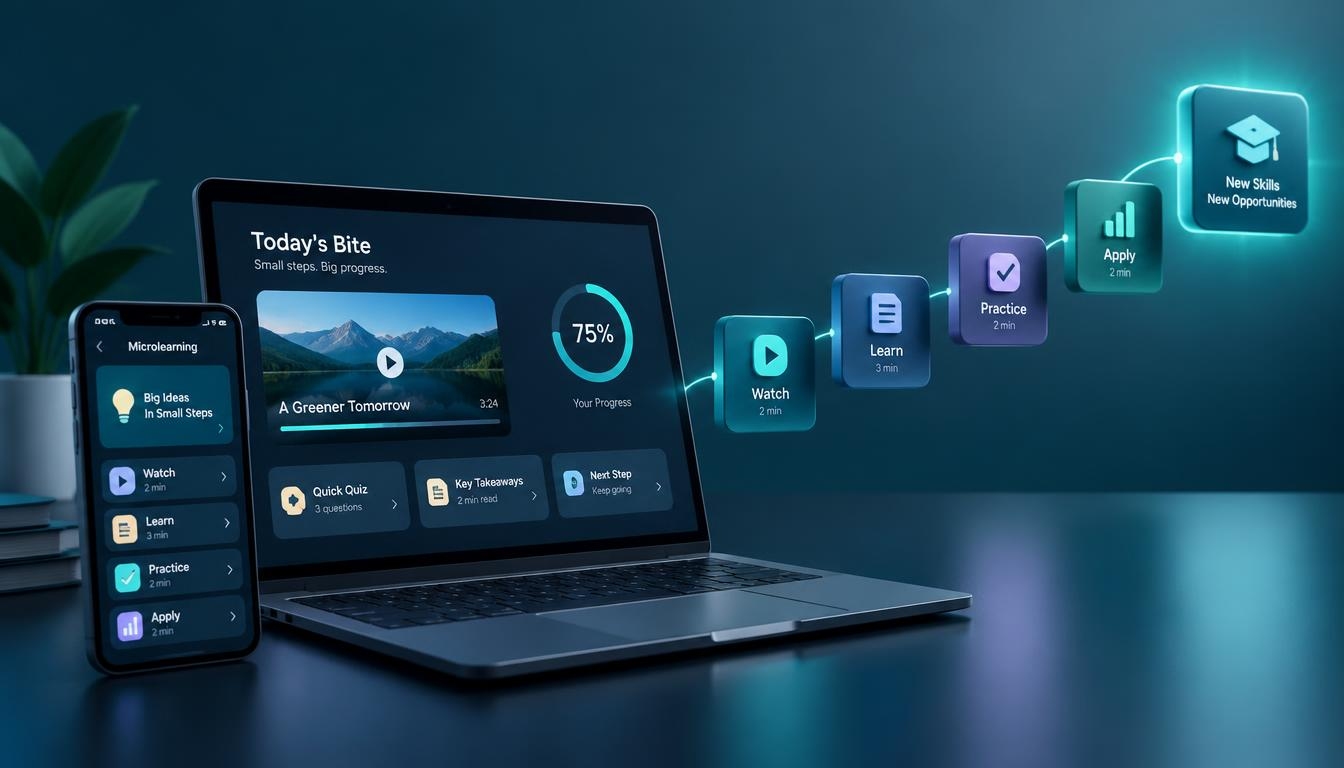
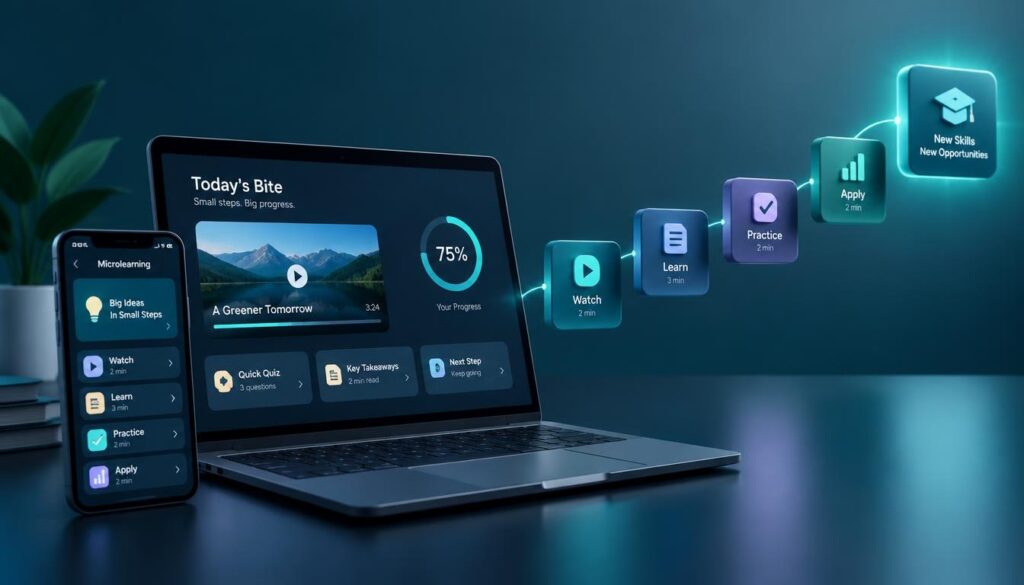
Microlearning breaks complex information into short, focused learning modules that employees can complete in a few minutes. Instead of requiring learners to complete lengthy courses, microlearning delivers specific knowledge and skills through bite-sized lessons, interactive videos, infographics, quizzes, simulations, and short assessments.
For businesses, this approach can make employee training more flexible, improve access to learning resources, and support continuous professional development.
However, creating effective microlearning content requires more than dividing a long course into smaller sections. Each module must have a clear learning objective, relevant content, appropriate instructional design, and an effective method of assessing knowledge.
At Vaidik EduServices, we understand the importance of developing structured, engaging, and scalable digital learning experiences. Professional microlearning content development can help organizations transform complex information into accessible learning resources that support their training objectives.
In this guide, we explain what microlearning is, how to develop effective microlearning modules, the benefits for businesses, essential development strategies, and how to choose the right microlearning content development partner.
What is Microlearning Content Development?
Microlearning content development is the process of designing and creating short, focused digital learning experiences that help learners acquire specific knowledge or skills within a limited amount of time.
These learning modules typically focus on one learning objective and present information in a concise, accessible, and engaging format.
Unlike traditional training programs that may contain multiple topics within a lengthy course, microlearning organizes learning content into smaller units that learners can access when they need specific information.
For example, instead of creating a two-hour employee cybersecurity training course, an organization can develop several short modules covering:
- Identifying phishing emails.
- Creating secure passwords.
- Protecting confidential information.
- Recognizing online security threats.
- Following data protection policies.
Each module addresses one topic and can include a short explanation, visual examples, an interactive activity, and a knowledge check.
Professional microlearning development combines instructional design, content creation, multimedia development, assessment design, and learning technology to create effective bite-sized learning experiences.
Key Characteristics of Microlearning Content
Effective microlearning content generally includes the following characteristics:
Short and Focused Lessons: Each module concentrates on one specific learning objective rather than covering too many topics.
Clear Learning Outcomes: Every lesson explains what learners should understand, demonstrate, or apply after completing it.
Interactive Learning Elements: Quizzes, scenarios, videos, and knowledge checks encourage active participation.
Mobile-Friendly Design: Learners can access training materials through smartphones, tablets, and desktop devices.
Relevant Learning Content: Information is directly connected to workplace tasks, practical situations, or specific knowledge requirements.
Flexible Learning Access: Employees can complete modules at convenient times and revisit important information when needed.
Why Are Businesses Investing in Microlearning Content Development?
Organizations are continuously looking for better ways to train employees, improve workforce capabilities, and deliver consistent learning experiences.
Long training sessions can create scheduling challenges, particularly for businesses with remote employees, multiple departments, and geographically distributed teams.
Microlearning offers an alternative by providing short learning experiences that can fit into employees’ daily schedules.
1. Reduces Training Time
Microlearning allows organizations to deliver specific training information through short modules instead of lengthy courses.
Employees can complete individual lessons without spending extended periods away from their regular responsibilities.
2. Supports Knowledge Retention
Focused learning content makes it easier to concentrate on individual concepts.
When supported by practice activities, knowledge checks, and spaced repetition, microlearning can reinforce important information over time.
3. Improves Employee Engagement
Interactive videos, animations, infographics, and scenario-based learning activities can make training more engaging than text-heavy presentations.
4. Supports Continuous Learning
Organizations can provide employees with regular learning opportunities through short modules covering new processes, workplace policies, product updates, and professional skills.
5. Makes Training More Accessible
Mobile-friendly microlearning content allows employees to access training materials across devices and locations.
6. Simplifies Content Updates
When information changes, individual modules can be revised without rebuilding an entire training program.
This is particularly useful for compliance training, product education, software tutorials, and operational procedures.
7. Supports Scalable Employee Training
Businesses can develop reusable microlearning modules for different departments, employee groups, and training requirements.
Types of Microlearning Content Development Solutions
Microlearning can be delivered through different content formats depending on the learning objectives, target audience, and complexity of the subject.
Professional microlearning content development services typically include the following formats.
1. Microlearning Video Development
Microlearning videos explain specific concepts through short, visually engaging presentations.
They may include:
- Animated explainer videos.
- Product demonstration videos.
- Software tutorial videos.
- Workplace safety videos.
- Process explanation videos.
- Employee onboarding videos.
For example, a software company can develop a three-minute tutorial explaining how employees should use a particular application feature.
2. Interactive Microlearning Modules
Interactive microlearning modules encourage learners to participate rather than simply consume information.
These modules may include:
- Click-to-reveal activities.
- Interactive diagrams.
- Drag-and-drop exercises.
- Decision-making activities.
- Scenario-based interactions.
- Knowledge checks.
Interactive learning is particularly useful for workplace training, product education, and procedural learning.
3. Microlearning Infographics
Infographics present complex information through visual representations, charts, illustrations, and concise explanations.
They are suitable for:
- Workplace guidelines.
- Process documentation.
- Safety instructions.
- Product information.
- Quick reference guides.
- Compliance reminders.
4. Microlearning Quizzes and Assessments
Short assessments help organizations evaluate whether employees understand the information presented in a learning module.
Common assessment formats include:
- Multiple-choice questions.
- True-or-false questions.
- Matching exercises.
- Scenario-based questions.
- Knowledge checks.
- Short problem-solving activities.
Businesses can also use assessment results to identify knowledge gaps and improve training content.
Explore assessment development services to understand how professionally designed assessments can support effective learning evaluation.
5. Scenario-Based Microlearning
Scenario-based microlearning presents realistic workplace situations that require learners to make decisions or apply their knowledge.
Examples include:
- Handling customer complaints.
- Responding to cybersecurity threats.
- Following workplace safety procedures.
- Managing difficult conversations.
- Identifying compliance violations.
This approach helps employees connect learning concepts with practical workplace situations.
6. Microlearning Podcasts and Audio Lessons
Short audio lessons can deliver important information when employees cannot actively view a screen.
Businesses may use audio microlearning for:
- Communication skills.
- Leadership development.
- Workplace reminders.
- Product knowledge.
- Language learning.
- Professional development.
7. Gamified Microlearning Content
Gamified learning incorporates game-based elements into short training modules.
Examples include:
- Points and rewards.
- Achievement badges.
- Progress indicators.
- Interactive challenges.
- Knowledge competitions.
- Scenario-based decision-making.
Gamification can encourage participation when it is aligned with meaningful learning objectives.
How to Create Effective Microlearning Training Modules
Developing successful microlearning content requires a structured process that connects business requirements with learner needs.
The following steps explain how organizations can create short, effective training modules.
Step 1: Identify the Training Requirements
Begin by understanding why the organization needs microlearning.
Identify the business challenge, target audience, required skills, and expected learning outcomes.
Consider the following questions:
- Who will complete the training?
- What knowledge or skills should employees acquire?
- What problems should the training address?
- How will employees access the learning content?
- What business outcomes should the program support?
For example, a company experiencing repeated cybersecurity mistakes may need short modules explaining password security, phishing identification, and confidential data protection.
Step 2: Define One Learning Objective Per Module
Every microlearning module should focus on a specific learning objective.
Avoid combining multiple unrelated subjects into one short lesson.
For example, a cybersecurity training program can be divided into separate modules:
Module 1: Recognizing Phishing Emails
Learning objective: Employees will identify common warning signs in suspicious emails.
Module 2: Creating Secure Passwords
Learning objective: Employees will understand the characteristics of strong passwords.
Module 3: Protecting Confidential Information
Learning objective: Employees will identify appropriate practices for handling sensitive company information.
Clear learning objectives make content development more focused and measurable.
Step 3: Break Complex Topics Into Smaller Learning Units
Analyze the training subject and divide it into manageable sections.
Each section should communicate one important concept or skill.
For example, a lengthy customer service training program can be organized into modules covering:
- Understanding customer expectations.
- Active listening techniques.
- Handling customer complaints.
- Effective communication.
- Resolving customer concerns.
- Maintaining customer relationships.
This modular structure makes it easier for employees to access specific information when required.
Step 4: Select the Appropriate Content Format
Choose a format that supports the learning objective.
For example:
Learning Objective | Recommended Format |
Explain a process | Short instructional video |
Demonstrate software usage | Screen-recorded tutorial |
Present complex information | Infographic |
Test knowledge | Short quiz |
Develop decision-making skills | Scenario-based activity |
Explain workplace procedures | Interactive module |
Reinforce key concepts | Quick reference guide |
The format should improve understanding rather than simply make the content visually attractive.
Step 5: Develop a Microlearning Storyboard
A storyboard defines the content, structure, and presentation of each learning module before development begins.
A typical storyboard includes:
- Module title.
- Learning objective.
- Screen-by-screen content.
- Visual requirements.
- Narration or script.
- Interactive activities.
- Knowledge checks.
- Feedback and explanations.
Storyboarding helps instructional designers organize information and reduce unnecessary revisions during production.
Step 6: Develop Engaging Learning Content
Once the storyboard is approved, instructional designers and developers create the final microlearning content.
This stage may involve:
- Writing concise instructional content.
- Developing graphics and infographics.
- Producing short educational videos.
- Creating interactive learning activities.
- Adding narration and captions.
- Designing quizzes and assessments.
- Integrating animations and visual explanations.
Professional instructional design ensures that every element supports the learning objective.
Learn more about instructional design services to understand how structured learning design supports effective digital training.
Step 7: Make Modules Mobile-Friendly
Employees should be able to access microlearning resources across different devices.
Responsive design helps ensure that text, images, videos, navigation, and interactive elements work properly on smartphones, tablets, and desktops.
Consider:
- Readable text sizes.
- Simple navigation.
- Touch-friendly interactions.
- Optimized multimedia.
- Accessible color contrast.
- Responsive layouts.
Step 8: Conduct Quality Assurance
Before publishing, review each module to ensure that it meets the required learning and technical standards.
The quality assurance process should include:
- Content accuracy.
- Grammar and spelling.
- Instructional consistency.
- Visual quality.
- Navigation functionality.
- Audio and video playback.
- Assessment accuracy.
- Accessibility.
- Mobile responsiveness.
- LMS compatibility.
Step 9: Publish and Deploy Microlearning Modules
After approval, publish the modules using the formats required by the organization.
Depending on the project, this may include:
- SCORM 1.2.
- SCORM 2004.
- xAPI.
- HTML5.
- Video files.
- PDF learning resources.
The selected format should be compatible with the organization’s learning management system (LMS) and tracking requirements.
Step 10: Measure Learning Effectiveness
After deployment, monitor learner participation, assessment performance, completion rates, feedback, and practical workplace outcomes.
Use these insights to improve existing modules and develop additional training resources.
Microlearning vs. Traditional eLearning: What Is the Difference?
Microlearning and traditional eLearning are both digital learning approaches, but they serve different instructional purposes.
Traditional eLearning may contain multiple topics, lessons, activities, and assessments within a comprehensive course.
Microlearning focuses on delivering specific information or skills through shorter learning experiences.
Comparison Factor | Microlearning | Traditional eLearning |
Content length | Short, focused modules | Often longer courses |
Learning objectives | Usually one focused objective | Multiple learning objectives |
Content structure | Bite-sized lessons | Comprehensive course structure |
Learning format | Videos, quizzes, infographics, short activities | Lessons, videos, simulations, assessments |
Accessibility | Often designed for quick access | May require dedicated learning sessions |
Content updates | Individual modules can be updated | Larger course sections may need revision |
Best suited for | Quick knowledge acquisition and reinforcement | In-depth learning and complex subjects |
Can Microlearning Replace Traditional eLearning?
Not always.
Microlearning is particularly effective for focused learning objectives, workplace reminders, product updates, and knowledge reinforcement.
However, complex subjects may require comprehensive learning experiences, detailed explanations, extensive practice, or advanced simulations.
Organizations can combine microlearning with traditional eLearning to develop blended learning programs.
For example, employees may complete a comprehensive leadership course and then access short microlearning modules covering conflict resolution, feedback techniques, and team communication.
Best Practices for Developing Effective Microlearning Content
Creating short learning modules does not automatically guarantee effective learning.
Organizations should follow established instructional design principles to ensure that microlearning content is relevant, accessible, and useful.
Keep Each Module Focused
Avoid including too many topics in one lesson. Every module should address a specific learning need.
Use Clear and Concise Language
Remove unnecessary explanations and focus on the information learners need to understand or apply.
Include Practical Examples
Use workplace situations, demonstrations, and real-world examples to connect learning with employee responsibilities.
Incorporate Active Learning
Include quizzes, decision-making exercises, interactive scenarios, and knowledge checks.
Use Visual Learning Elements
Diagrams, illustrations, animations, and infographics can help explain complex concepts.
Apply Spaced Repetition
Revisit important concepts through short follow-up lessons, reminders, and practice questions over time.
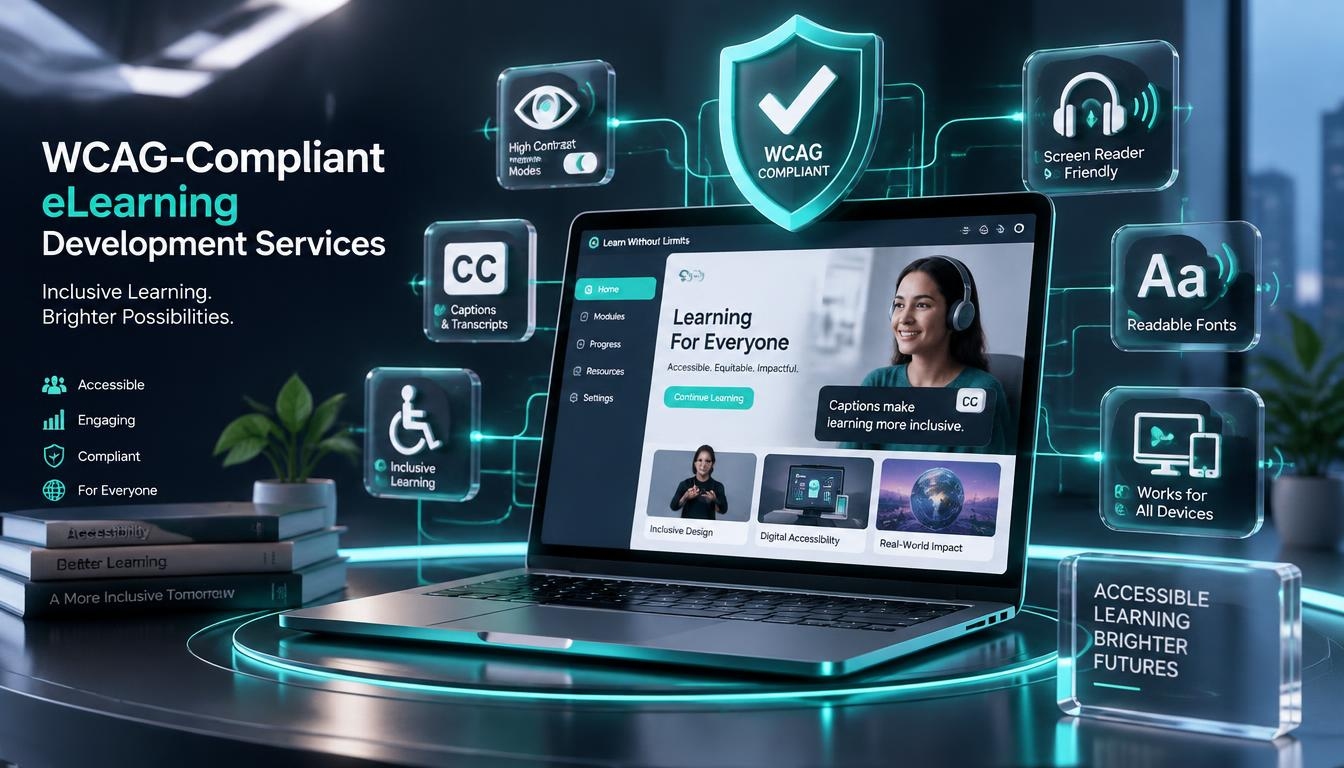
Ensure Accessibility
Design learning content with accessibility in mind.
Consider captions, transcripts, alternative text, keyboard navigation, readable layouts, and appropriate color contrast.
Explore accessibility services to understand how accessible digital content can support inclusive learning experiences.
Maintain Consistent Design
Use consistent typography, colors, layouts, navigation, and instructional patterns across modules.
Evaluate and Improve Regularly
Collect learner feedback and analyze performance data to identify areas where content needs improvement.
Benefits of Outsourcing Microlearning Content Development Services
Developing high-quality microlearning content requires instructional designers, content developers, graphic designers, multimedia specialists, and quality assurance professionals.
Building and maintaining an internal team for every project may be challenging, especially when businesses need multiple modules within short timelines.
Outsourcing microlearning content development provides access to specialized expertise and scalable production resources.
1. Access to Professional Instructional Design Expertise
An experienced eLearning development partner can structure content around measurable learning objectives and appropriate instructional strategies.
2. Faster Microlearning Course Production
Established development workflows, reusable templates, and experienced production teams can help streamline the creation of multiple learning modules.
3. Cost-Effective Learning Content Development
Outsourcing can reduce the need to recruit additional full-time instructional designers, multimedia developers, and content specialists.
4. Scalable Content Production
Organizations can outsource individual modules, complete training programs, or ongoing microlearning content development projects.
5. Consistent Learning Experiences
Professional development teams use standardized design guidelines and quality assurance processes to maintain consistency across learning materials.
6. Access to Multiple Content Formats
A specialist provider can support different formats, including interactive modules, videos, infographics, assessments, and digital learning resources.
7. More Time for Core Business Activities
Internal teams can focus on workforce management, strategic planning, and business operations while external specialists support learning content production.
What Is Included in Professional Microlearning Content Development Services?
A professional microlearning development partner may provide a range of services based on organizational training requirements.
Microlearning Strategy and Instructional Design
Developing a learning strategy, defining objectives, structuring content, and selecting appropriate instructional approaches.
Microlearning Course Design and Development
Creating short digital learning modules with structured content, visual elements, and interactive activities.
Custom Microlearning Video Production
Developing animated videos, instructional videos, demonstrations, and other short-form educational content.
Interactive Microlearning Development
Creating interactive modules with quizzes, knowledge checks, scenarios, and learner activities.
Microlearning Assessment Development
Designing questions and assessments that evaluate learners’ understanding of individual concepts.
Corporate Microlearning Content Development
Creating training resources for employee onboarding, compliance, leadership, communication, customer service, and workplace skills.
Mobile Learning Content Development
Designing responsive learning resources that employees can access across smartphones, tablets, and desktop devices.
LMS-Compatible Microlearning Development
Publishing digital learning modules in suitable formats such as SCORM and xAPI, depending on technical requirements.
Microlearning Content Quality Assurance
Reviewing instructional accuracy, visual consistency, functionality, accessibility, and technical compatibility.
Businesses looking for broader digital training support can also explore eLearning development services and educational content development services from Vaidik EduServices.
Microlearning Use Cases Across Different Industries
Microlearning is suitable for organizations across multiple industries because training content can be designed around specific workplace responsibilities and knowledge requirements.
1. Healthcare and Medical Training
Healthcare organizations can use microlearning to deliver short training modules covering:
- Patient safety procedures.
- Infection prevention.
- Medical equipment usage.
- Healthcare compliance.
- Clinical documentation.
- Data privacy and security.
2. Banking and Financial Services
Financial organizations can develop microlearning courses covering:
- Financial compliance.
- Fraud prevention.
- Customer data protection.
- Anti-money laundering awareness.
- Risk management.
- Customer service practices.
3. Manufacturing and Industrial Training
Manufacturing businesses can use microlearning for:
- Workplace safety procedures.
- Equipment operation.
- Quality control.
- Standard operating procedures.
- Maintenance instructions.
- Emergency response training.
4. Retail and Customer Service
Retail organizations can develop short training modules covering:
- Product knowledge.
- Customer communication.
- Sales techniques.
- Point-of-sale systems.
- Inventory management.
- Customer complaint resolution.
5. IT and Technology Companies
Technology businesses can use microlearning for:
- Software tutorials.
- Cybersecurity awareness.
- Data protection.
- Application training.
- Product updates.
- Technical process documentation.
6. Education and EdTech
Educational organizations and EdTech companies can develop microlearning content for:
- Concept-based learning.
- Teacher professional development.
- Student revision resources.
- Digital learning tutorials.
- Subject-specific knowledge checks.
- Educational technology training.
How to Measure the Effectiveness of Microlearning Programs
Businesses should evaluate microlearning based on learning performance and business outcomes rather than measuring course completion alone.
The following key performance indicators (KPIs) can help organizations assess their microlearning initiatives.
Module Completion Rate
Measures the percentage of learners who complete assigned microlearning modules.
Knowledge Assessment Scores
Evaluates how well employees understand the information presented in individual lessons.
Knowledge Retention
Measures whether learners can recall and apply important information after completing the training.
Learner Engagement
Tracks participation in interactive activities, quizzes, videos, and learning resources.
Training Time
Measures the time employees spend completing training modules and compares it with previous training approaches.
Content Utilization
Tracks how frequently employees access and revisit learning resources.
Workplace Performance
Evaluates whether training contributes to improved task performance, fewer errors, better compliance, and stronger employee capabilities.
Return on Training Investment
Compares training development and delivery costs with measurable organizational improvements.
Common Microlearning Content Development Challenges and Solutions
Although microlearning offers several advantages, organizations must address certain challenges to develop effective learning experiences.
Challenge 1: Oversimplifying Complex Topics
Breaking information into smaller modules can sometimes remove important context.
Solution: Organize content into logically connected modules and provide additional learning resources for subjects requiring deeper explanations.
Challenge 2: Creating Too Much Content
Developing numerous short modules without a clear learning strategy can overwhelm learners.
Solution: Prioritize learning objectives and create only the modules that address genuine training requirements.
Challenge 3: Maintaining Content Consistency
Multiple developers working on different modules may create inconsistent visual styles and instructional approaches.
Solution: Establish shared templates, design guidelines, and quality standards.
Challenge 4: Limited Learner Engagement
Short lessons can become ineffective when they contain only static text.
Solution: Use relevant examples, interactive activities, short videos, and scenario-based exercises.
Challenge 5: Measuring Long-Term Knowledge Retention
A learner completing a module does not necessarily mean they have retained the information.
Solution: Use follow-up assessments, spaced repetition, and practical workplace evaluations.
Challenge 6: Technical and Accessibility Issues
Modules may not work consistently across devices or meet accessibility requirements.
Solution: Test content across supported devices and LMS platforms and include accessibility checks throughout development.
Why Choose Vaidik EduServices for Microlearning Content Development?
Creating effective microlearning requires a combination of instructional design expertise, educational content development, multimedia production, assessment design, and technical quality assurance.
Vaidik EduServices supports businesses, publishers, educational organizations, and EdTech companies with structured educational content and digital learning development solutions.
Our services can support organizations looking to develop scalable and engaging microlearning experiences for employees, customers, and learners.
Our Microlearning Development Capabilities
Custom Microlearning Course Development: Creating short, focused learning modules aligned with specific business and training objectives.
Instructional Design and Storyboarding: Structuring content into clear learning objectives, storyboards, and engaging instructional sequences.
Interactive Learning Content: Developing quizzes, knowledge checks, scenarios, and interactive learning activities.
Microlearning Video and Multimedia Content: Creating visual learning resources that communicate important concepts effectively.
Corporate Training Content Development: Supporting employee onboarding, compliance, product knowledge, and professional development initiatives.
Assessment and Quiz Development: Designing knowledge checks and assessments to evaluate learner understanding.
LMS-Compatible Content Development: Supporting suitable digital publishing formats based on project requirements.
Quality Assurance and Accessibility: Reviewing learning content for accuracy, functionality, consistency, and accessibility.
Our Microlearning Content Development Process
We follow a structured development approach to support efficient project delivery.
- Requirement Analysis: Understand your training objectives, target audience, existing content, and project requirements.
- Content Structuring: Organize information into focused microlearning topics and modules.
- Instructional Design: Develop learning objectives, storyboards, and instructional strategies.
- Content Development: Create videos, interactive modules, infographics, and assessment activities.
- Quality Assurance: Review content accuracy, functionality, accessibility, and technical requirements.
- Final Delivery: Provide approved microlearning resources in the agreed formats.
Whether you need a few short training modules or a complete microlearning content library, Vaidik EduServices can support your digital learning content requirements.
Conclusion
Microlearning is changing how organizations approach employee training and digital learning content development. By dividing complex information into short, focused modules, businesses can provide employees with flexible learning opportunities that support continuous knowledge development.
However, successful microlearning requires more than creating short videos or dividing lengthy courses into smaller lessons. Organizations need clear learning objectives, effective instructional design, relevant multimedia, meaningful assessments, and consistent quality assurance.
Professional microlearning content development services help businesses transform existing training materials and organizational knowledge into engaging, accessible, and scalable digital learning experiences.
Vaidik EduServices supports organizations with instructional design, educational content development, custom eLearning development, assessment creation, and digital learning solutions.
Ready to develop effective microlearning modules for your organization? Connect with Vaidik EduServices to discuss your microlearning content development requirements and build training experiences that support your business goals.
Frequently Asked Questions
Microlearning content development services involve designing and producing short, focused digital learning modules that address specific knowledge or skill requirements. These services may include instructional design, video production, interactive content, infographics, assessments, and LMS-compatible course development.
A microlearning module often takes approximately 2–10 minutes to complete, although the ideal duration depends on the learning objective, subject complexity, and target audience. The focus should be on delivering meaningful learning rather than meeting an arbitrary time limit.
Popular microlearning formats include short instructional videos, interactive courses, infographics, quizzes, scenario-based activities, podcasts, animations, and quick reference guides.
Microlearning delivers short lessons focused on specific learning objectives. Macrolearning involves more comprehensive learning experiences that cover broader subjects and may require longer training sessions.