
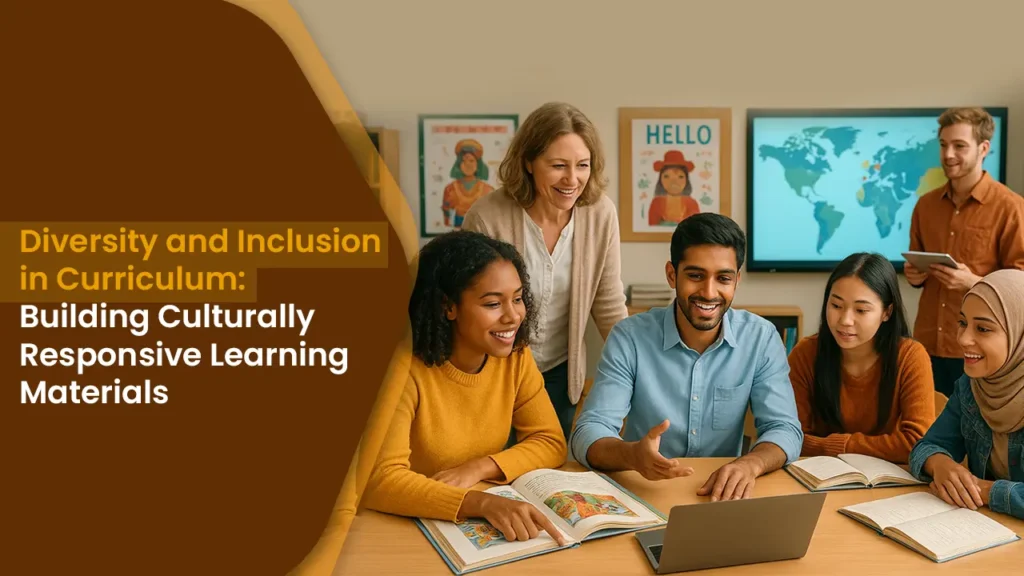
In the global world of today, education is essential for forming viewpoints, encouraging empathy, and equipping students to participate actively in a variety of groups. However, many students feel underrepresented or disengaged from the learning process since traditional curriculum has frequently ignored the importance of diversity.
The goal of diversity and inclusion in curriculum development is to create learning materials that validate and represent the identities, experiences, and histories of all students, not just to include token multicultural content. When education is really inclusive, students are empowered to face prejudices, understand diverse cultures, and broaden their perspective on the world.
This is particularly important in classrooms that are growing more diverse as a result of migration, globalization, and the growing awareness of underrepresented voices. Teachers may make sure that every student feels recognized, appreciated, and included in their educational path by implementing culturally responsive teaching strategies and materials.
Beyond representation, a curriculum that values diversity and inclusion actively incorporates many viewpoints, histories, and contributions from many racial, ethnic, gender, and socioeconomic origins.
Culturally responsive education acknowledges that students’ learning styles and cognitive development are influenced by their diverse language, cultural, and social backgrounds.
A curriculum that only emphasizes Western literature, history, and scientific advancements, for instance, ignores the diversity of contributions made by people around the world. Students are more motivated to learn and feel like they belong when they recognize themselves in the material they study.
On the other hand, kids learn more and develop critical thinking skills when they come across viewpoints that differ from their own. By equipping students to engage politely and productively in a diverse society, this curriculum design strategy benefits not only minority students but also the entire classroom.
Diversity and inclusion in curriculum development is a well-known concept, but putting it into practice can be difficult. Many educational institutions continue to use antiquated resources that either ignore important cultural contributions or perpetuate stereotypes.
Furthermore, teachers might not have the tools or training needed to successfully integrate inclusive content. It takes conscious effort to incorporate narratives that represent many cultures, races, genders, abilities, and experiences when creating responsive learning materials.
This entails including literature from authors of various backgrounds, updating textbooks to represent a range of historical perspectives, and modifying instructional strategies to meet the requirements of students with varying learning styles.
Moreover, inclusive education goes beyond just teaching knowledge; it also entails creating a space where students may freely express who they are, participate in social justice conversations, and confront prejudiced viewpoints.
The Significance of Inclusion and Diversity in Curriculum Development
It is impossible to exaggerate how crucial it is to include diversity and inclusion in curriculum creation. Fostering cultural competence and the capacity to comprehend, value, and communicate with individuals from other backgrounds is one of the main advantages of inclusive education.
Students who gain cultural understanding through their education are better prepared for success at a time when communities, workplaces, and online spaces are becoming more diverse. Cultural misconceptions, unconscious biases, and narrow worldviews might result from a uniform curriculum that exclusively emphasizes dominant narratives.
Students gain empathy and critical thinking abilities when they are exposed to a wider range of viewpoints. These abilities are crucial for negotiating social and professional situations in the real world.
As an example, research indicates that students from underrepresented backgrounds perform better academically when exposed to culturally relevant content that acknowledges their heritage and lived experiences.
Moreover, when educators validate students’ identities, it improves motivation, engagement, and overall academic performance. In the past, a number of schools have prioritised the experiences of dominant cultural groups while neglecting or misrepresenting minority histories and contributions.
This can result in academic disengagement, lower self-esteem, and feelings of alienation among students who do not see themselves reflected in the materials they study.
Furthermore, prejudices and preconceptions are contested by diversity and inclusion in curriculum creation. Implicit biases in a lot of traditional educational materials support racial, gender, and cultural stereotypes.
For instance, colonialism has frequently been presented in history textbooks from a Eurocentric viewpoint, undervaluing the voices and resistance of indigenous and colonized peoples.
In a similar vein, literature classes have often overlooked the diversity of African, Asian, Latin American, and Indigenous storytelling traditions in favor of Western authors. Teachers can provide pupils a more accurate and comprehensive understanding of literature, history, and social systems by varying the topic they teach.
As a result, students are more equipped to challenge prevailing narratives and understand the power structures that influence the creation of knowledge.
How to Create an Inclusive Curriculum using Responsive Learning Materials
1. Including Diverse Viewpoints from Various Subjects
Multiple cultural viewpoints are incorporated into all subjects not just history and literature thanks to an inclusive curriculum. For example, in science, students should be taught about the achievements of African, Asian, and Indigenous inventors, as well as discoveries made by experts from diverse backgrounds.
Social studies should examine historical events from a variety of perspectives, and mathematics can integrate approaches to problem-solving from several cultures.
A well-rounded curriculum incorporates inclusion into all of its subjects rather than separating varied topics into a single chapter or elective course.
2. Employing Teaching Methods That Are Culturally Sensitive
Changing teaching strategies to accommodate students’ cultural backgrounds and learning preferences is known as culturally responsive teaching. Storytelling, oral traditions, group learning, and multilingual assistance are a few examples of this.
For instance, teachers can encourage students to express cultural narratives in their original languages or utilize multilingual resources in linguistically diverse classes.
Furthermore, students can relate academic material to their personal experiences through project-based learning that integrates real-world cultural challenges, which increases the relevance and significance of education.
3. Diversified and Updated Reading Materials
Textbooks and reading materials should be updated and diversified. To find representational gaps, biases, and omissions, educational institutions must critically evaluate current textbooks.
Diverse authors from different racial, gender, and socioeconomic backgrounds should be included in school reading lists. Students should have access to works by Black, Indigenous, Asian, Middle Eastern, LGBTQ+, and differently abled authors rather than just Eurocentric literary canons. This method allows students to interact with diverse worldviews while also broadening their enjoyment of literature.
4. Fostering Inclusive Conversations in the Classroom
Fostering conversations about identity, social justice, and global challenges requires a classroom setting that is both open and safe. In order to accommodate a range of opinions, educators should encourage students to express their experiences and thoughts. Students can examine issues of racism, gender, ability, and class in an analytical and courteous way with the use of structured debates, storytelling, and reflective writing tasks.
It’s also critical that instructors receive training on how to handle potential cases of bias or discrimination and how to facilitate challenging talks.
Conclusion
It takes a radical change in the way education is planned and delivered to incorporate diversity and inclusion into curriculum development. It is not enough to simply update textbooks or include multicultural content.
The objective is to produce educational resources that honor and represent every student, enabling them to participate critically in their environment. In addition to preparing kids for academic achievement, an inclusive curriculum gives them the empathy, cultural sensitivity, and flexibility necessary to prosper in a diverse society.
Schools, legislators, and educators must demonstrate a commitment to continuously updating and enhancing curricula as education develops in order to guarantee inclusivity.
This entails giving voice to underrepresented groups, including varied viewpoints from many academic fields, and cultivating an environment in the classroom that prioritizes representation and equity.
In the future of education, all students will be able to see themselves mirrored in the knowledge they gain and feel empowered to make a difference in the world, regardless of their background, ability, gender, race, or ethnicity.
Frequently Asked Questions
All students will feel represented and appreciated in their education thanks to diversity and inclusion. By exposing students to a variety of viewpoints, it fosters cultural competency, lessens prejudices, and improves critical thinking abilities.
Teachers can employ culturally sensitive teaching methods, update textbooks, add varied literature, and establish forums for inclusive conversations that affirm students’ experiences and cultures.
By adding contributions from underrepresented communities, various viewpoints can be integrated into many courses, including science, math, literature, history, and even physical education.
All students gain from inclusive curricula since they increase their worldview, lessen prejudices, and get them ready for a variety of social situations and workplaces.
The development of inclusive curricula can be hampered by institutional prejudices, obsolete texts, teacher training deficiencies, and resistance to change. Ongoing lobbying and educational reform, however, can propel significant advancements.