

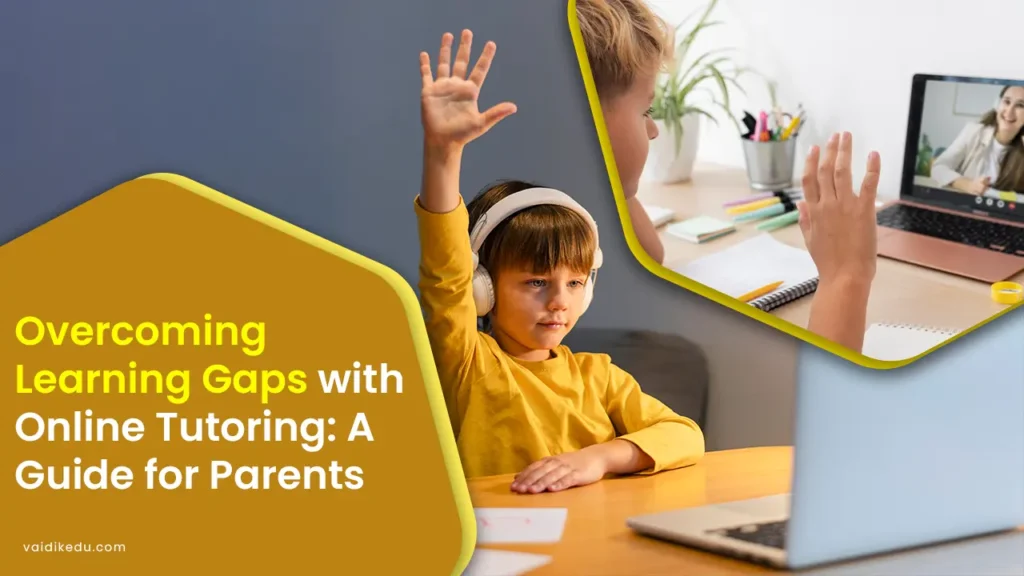
As a parent, there’s no worse feeling than watching your child struggle with something and not knowing how to help. You might notice the signs of a once-confident child now hesitating to solve math problems, or a sudden drop in grades that doesn’t quite match the effort they’re putting in. Maybe you’ve even heard them say, “I just don’t get it anymore,” and felt that pang of helplessness.
Many parents are dealing with the same concern: their children are falling behind, not because they’re not intelligent or hardworking, but because a few building blocks got missed somewhere along the way. These small gaps in understanding can quietly grow into bigger challenges, especially in subjects that build on previous knowledge.
The good news? You don’t have to face this alone. With the right tools and support, these learning gaps can be addressed and often, even turned into strengths. Online tutoring is one of the most effective ways families do this today.
But how does it work? Is it just another screen-time trap? Or can it genuinely make a difference?
This guide will walk you through everything you need from identifying learning gaps to choosing the right tutor so you can feel confident helping your child catch up, keep up, and even get ahead.
What Are Learning Gaps And Why Do They Happen
A learning gap happens when a student doesn’t fully understand a concept, and they need to move on to the next level of learning. Think of it like a missing puzzle piece. The bigger picture can’t be completed until that piece is found and put in place. For example, if a child didn’t fully grasp long division in Grade 4, they might struggle with fractions or percentages in Grade 5 and beyond.
Now, learning gaps aren’t always obvious. Some kids are great at masking their confusion or memorising just enough to pass a test. But these small cracks can widen over time, especially in subjects like math, science, and grammar, where each concept builds on the previous one.
Here are a few common reasons:
- Missed school days due to illness, travel, or unexpected life events
- Changing schools or curricula, where the same topic is taught differently or skipped
- Large classroom sizes, where teachers can’t always give individual attention
- Fast-paced teaching, which doesn’t leave time to clarify doubts
- Learning difficulties or anxiety, which can affect a child’s ability to absorb or retain information
Sometimes, it’s just a matter of timing. Maybe the concept was introduced when the child wasn’t emotionally or mentally ready to grasp it. That’s not their fault, which doesn’t mean they can’t learn it now.
Learning gaps are normal. Almost every student has them at some point. The key is to recognise them early and find the right way to fill them, precisely where online tutoring comes in.
Signs Your Child May Be Struggling (Even If They Don’t Say It)
Most kids won’t say, “Hey, I didn’t understand what the teacher explained today.”Sometimes, they don’t even realise they’re struggling until it starts showing up in their grades… or mood.
As a parent, you probably have a gut feeling when something’s off. Maybe your child, who once enjoyed learning, suddenly avoids studying. Perhaps they’re unusually quiet after school, or they rush through homework just to get it over with. These could be little red flags that they’re falling behind even if they haven’t said it aloud.
Here are some subtle (and not-so-subtle) signs to look out for:
- They keep making the same mistakes. If your child repeatedly gets similar types of questions wrong, even after correction, it might be a sign that the underlying concept isn’t clear.
- Homework can feel like a battle. It might not just be laziness if you constantly remind, negotiate, or argue to finish homework. Often, kids avoid what they find challenging or confusing.
- Sudden drop in confidence A once-curious child may start saying things like, “I’m just not good at this,” or “Everyone else understands it except me.” That self-doubt can be heartbreaking and often stems from a growing learning gap.
- They seem distracted or disinterested. Struggling students often zone out during study time. It’s not that they don’t care, it’s just easier to disengage than to feel “lost” repeatedly.
- Test anxiety or last-minute panic Does your child panic before tests, even when they’ve studied? It could mean they’re trying to memorise instead of truly understanding the material.
- They avoid talking about school. A child who used to chatter about their day suddenly goes quiet when you ask about classwork or tests. That silence can say a lot.
Every child expresses their struggle differently. Some get frustrated, others withdraw. Some mask it with humour or distraction. The important thing is to notice the patterns and respond with patience, not pressure.
Behind most learning struggles is not a lack of effort, but a lack of support.
The Role of Online Tutoring in Closing Learning Gaps
Let’s face it, classroom learning has its limits. Even the most dedicated teachers can’t always give every child the individual attention they need. It’s not a fault of the system; it’s just the reality of 30 or more students and limited time.
This is where online tutoring quietly steps in and makes a difference.
Imagine this: your child is sitting comfortably at home, without the distractions of a noisy classroom or the pressure of raising their hand in front of peers. They’re working one-on-one with someone who’s not just teaching, but listening, spotting where the gaps are and patiently helping them fill those in, bit by bit.
That’s what online tutoring can offer.
It’s not just about re-teaching what the school covered, it’s about slowing down when needed, returning to basics, and ensuring the foundation is solid. A good tutor doesn’t rush through the syllabus; they pause, explain things differently, and check for real understanding before moving on.
Here’s why it works so well:
- Personalised pace: Your child can spend more time on tricky topics and breeze through what they already know, no pressure to “keep up” with the rest of the class.
- Comfortable environment: Home is a safe space. Kids are more likely to speak up, ask questions, and admit when confused something they might hesitate to do at school.
- Flexible scheduling: Whether your child is a morning thinker or an evening learner, sessions can be adjusted to match their energy levels. No more dragging them to a class after a tiring day.
- Access to specialists: You’re no longer limited by geography. Whether your child needs help with ICSE English or CBSE Maths, there’s someone with the right expertise.
However, the most significant gift of online tutoring is that it rebuilds confidence. When children start understanding things they once struggled with, you can see their shoulders relax, they smile more often, and they start believing, “Hey, maybe I can do this.”
And that belief? That’s the real turning point.
Online tutoring isn’t a magic wand. But when it’s consistent, personalised, and supportive, it becomes one of the most effective ways to close learning gaps and sometimes, even turn them into strengths.
Benefits Beyond Academics
When we think of tutoring, we usually picture better marks, clearer concepts, and catching up on missed lessons. And yes those are important. But what often gets overlooked is how the right kind of support can quietly transform a child beyond the pages of a textbook.
Learning isn’t just about the contentit’s also about confidence, mindset, and emotional safety.
One of the first things many parents notice after starting online tutoring is how their child starts believing in themselves again. That defeated “I can’t do this” slowly turns into “Wait, let me try.” And that little shift is everything.
Some Benefits That often come with consistent, caring online tutoring:
- Confidence Boost
It’s incredible what understanding a tricky topic can do for a child’s self-esteem. When a student finally “gets it,” you can almost see their shoulders relax. It’s not just about solving a math problem it’s about proving to themselves that they’re capable.
- Better Focus And Discipline
Regular sessions, even if just a couple of times a week, help kids develop structure. They get used to setting aside quiet time, concentrating on a task, and being accountable. It’s gentle but steady, and over time, it builds real discipline.
- Comfort in Asking Questions
In a typical classroom, many kids hold back their doubts out of fear of “sounding silly.” With one-on-one tutoring, that fear melts away. They learn that it’s okay to be confused and ask again and that learning is a process, not a performance.
- Improved Problem-Solving Skills
Online tutors often teach students how to think, not just what to think. Instead of memorising answers, kids start understanding the “why” behind them. This critical thinking spills over into other subjects and even daily life.
- Emotional Safety
Sometimes, the biggest thing a tutor offers isn’t academic, it’s being a calm, encouraging adult who listens. For many children, especially those who feel lost in the crowd, this quiet support can make a huge difference in how they view learning (and themselves).
Ultimately, the goal isn’t just to raise grades, it’s to raise children who are confident, curious, and unafraid of challenges. The right tutoring experience can be a decisive step in that direction.
What Can Parents Do to Support the Process?
Hiring a tutor online or otherwise is a significant first step. But here’s the thing: even the best tutor can’t work magic alone. Your involvement as a parent still matters more than you might think.
Now, that doesn’t mean you need to sit. What Can Parents Do to Support the Process?
Hiring a tutor online or otherwise is a significant first step. But here’s the thing: even the best tutor can’t work magic alone. Your involvement as a parent still matters more than you might think.
That doesn’t mean you need to sit beside your child every minute or start revisiting school textbooks yourself. Support doesn’t have to be overwhelming sometimes, it’s in the little things that quietly make a big difference.
Here are some simple but meaningful ways you can help:
- Start with a Conversation, Not Pressure
Begin by talking to your child gently, without judgment. Ask how they feel about their subjects. What feels easy? What feels tough? Just listening can open a door. The goal is to make them feel safe, not scrutinised. When a child knows they won’t be “scolded” for struggling, they’re much more likely to open up and accept help.
- Set a Routine That Respects Their Energy
Online tutoring works best when your child is calm and focused. Try to schedule sessions at a time when they’re not mentally drained, maybe not right after school or right before bed. Every child is different. Observe and adjust. Even small shifts in timing can make a big difference in how well they absorb information.
- Create a Distraction-Free Study Zone
It doesn’t need to be fancy, just a quiet, comfortable corner with a good internet connection, minimal background noise, and everything they need in reach. A tidy space signals the brain: “It’s learning time now.” That simple mental shift helps more than we realise.
- Celebrate Effort, Not Just Results
Did your child finally understand a tricky topic after weeks of trying? That’s a big win even if the next test score isn’t perfect. Praise the effort. Progress often looks small initially, but that’s where confidence grows. A kind word from you can do more than any report card.
- Stay Connected With the Tutor
You don’t need to hover, but a quick message once in a while just to check in helps you stay informed and shows the tutor that you’re involved. Most tutors truly appreciate this. It builds a team mindset, where everyone works toward the same goal: your child’s growth.
- Be Patient With the Process
Progress takes time. There may be weeks when everything clicks and others when nothing seems to go in. That’s normal. Stay steady, keep encouraging, and remember: you’re not just supporting their learning, you’re shaping how they feel about learning itself.
In the end, it’s not just about hiring a tutor. It’s about showing your child that you believe in them consistently, patiently, and without conditions. That kind of support? That’s what turns tutoring into transformation.
Conclusion
If there’s one thing we all need to remind ourselves as parents, it’s this: every child learns at their own pace. And that’s perfectly okay.
In a world that often celebrates speed and perfection, high scores, fast results, academic medals it’s easy to forget that real learning is more like a slow, steady climb than a race to the top.
There are pauses. Setbacks. Days when nothing clicks. And then, out of the blue, a breakthrough. What matters most isn’t how fast your child “catches up,” but that they’re moving forward step by step, with support and encouragement.
Online tutoring can be a powerful part of that journey. But it’s not just about getting better at math or grammar. It’s about building resilience, reclaiming confidence, and helping your child feel seen, understood, and supported not just as a student but as a person.
So if your child is struggling, don’t panic. And don’t compare their progress with anyone else’s. Take a breath, take one step at a time, and walk with them. Because when a child knows they’re not walking alone that someone is walking beside them that’s when the real learning begins.
Frequently Asked Questions
It’s not always obvious. Some kids hide it well; they’ll nod along in class but quietly struggle during homework. Watch for signs like repeated mistakes in specific topics, sudden interest drops, or anxiety before tests. If something feels “off,” trust your instincts; it’s always okay to explore further.
For many kids, it can be even better. Online tutoring allows for one-on-one focus without the distractions of a busy classroom. Plus, kids are often more relaxed in their home environment, making it easier to ask questions and admit when confused.
You don’t have to sit through every session, but your support still matters. Setting a quiet study space, encouraging consistency, and staying in touch with the tutor go a long way. A little involvement shows your child that you care and that you’re on this journey with them.
That’s pretty common, especially if they feel embarrassed or tired. Instead of forcing it, try framing tutoring as a helpful guide to someone who’s there to make things easier, not harder. Give them time to adjust, and celebrate small wins along the way. Often, their attitude shifts once they feel that early boost of success.