

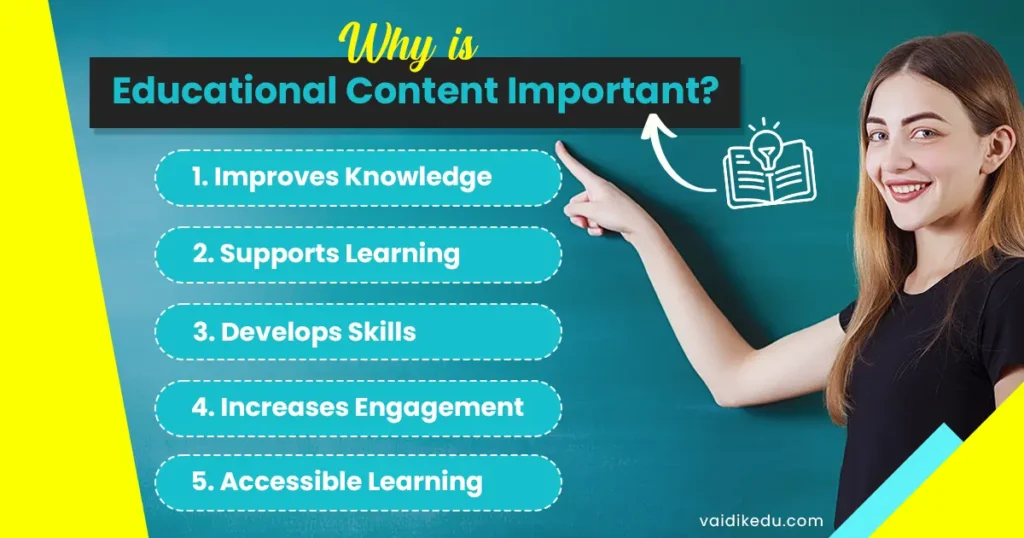
In today’s fast-paced and information-rich world, educational content plays a vital role in shaping how individuals learn, grow, and succeed. It is not only confined or shrunk to just textbooks and classroom courses or lessons, but it is also the foundation upon which knowledge, skills and values are built.
Educational content provides structured and reliable information that helps learners to understand concepts clearly. Whether it’s a child learning to read or a student exploring advanced science, quality content ensures that learning is accurate and meaningful.
As Nelson Mandela once said, “Education is the most powerful weapon which you can use to change the world.” This powerful statement reflects the true importance of meaningful educational content in transforming lives and societies.
Therefore, educational content is the foundation of any learning experience. The educational content is no longer enough to create content only, but it is to be clear, practical, interactive, measurable and accessible.
What is Educational Content
Educational content is any content created with the purpose of learning or teaching, and to support learning and education. The goal of educational content Development is to help someone to understand the concepts, develop skills or gain knowledge in a clear and structured way.
Good educational content is informative, provides accurate knowledge, is structured to organise clearly, always engaging, which keeps their learners interested and purposeful, and is designed to achieve learning goals.
The educational content is not just informative; it is designed to teach. Some of the common examples of educational content are textbooks and study materials, online courses and video lectures, educational apps and websites, worksheets, quizzes, assignments, interactive activities, games, and simulations.
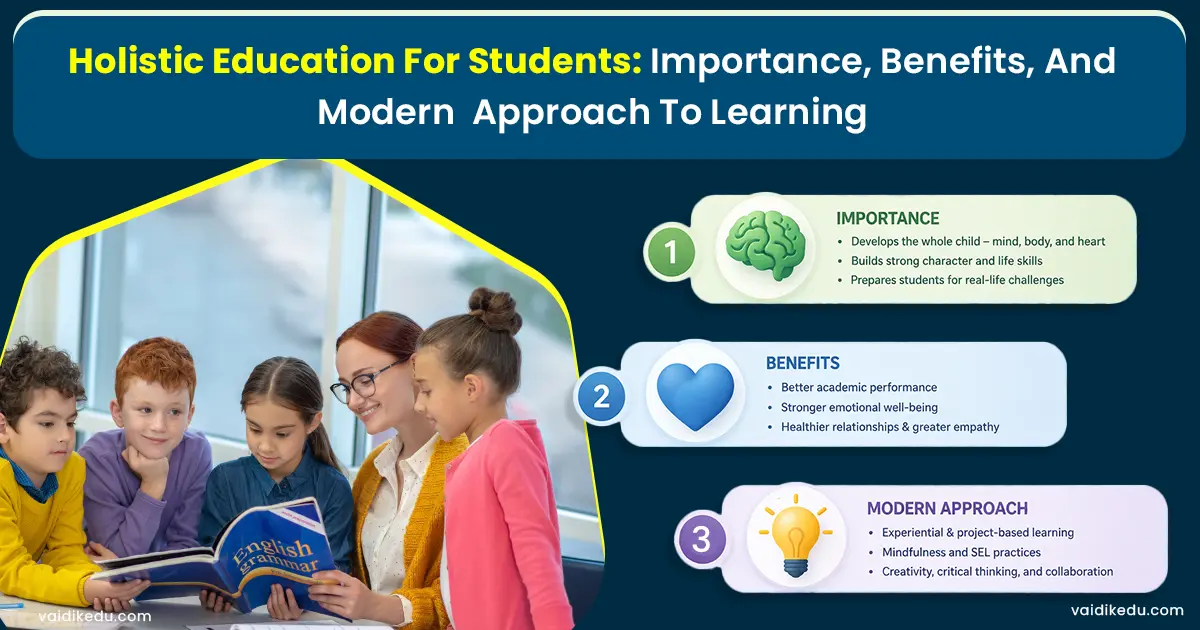
Educational content is the backbone of effective learning. It not only imparts knowledge but also develops skills, fosters critical thinking, and shapes values. In a world that is constantly evolving, high-quality educational content ensures that learners are prepared to adapt, grow, and contribute meaningfully.
Types of Educational Content
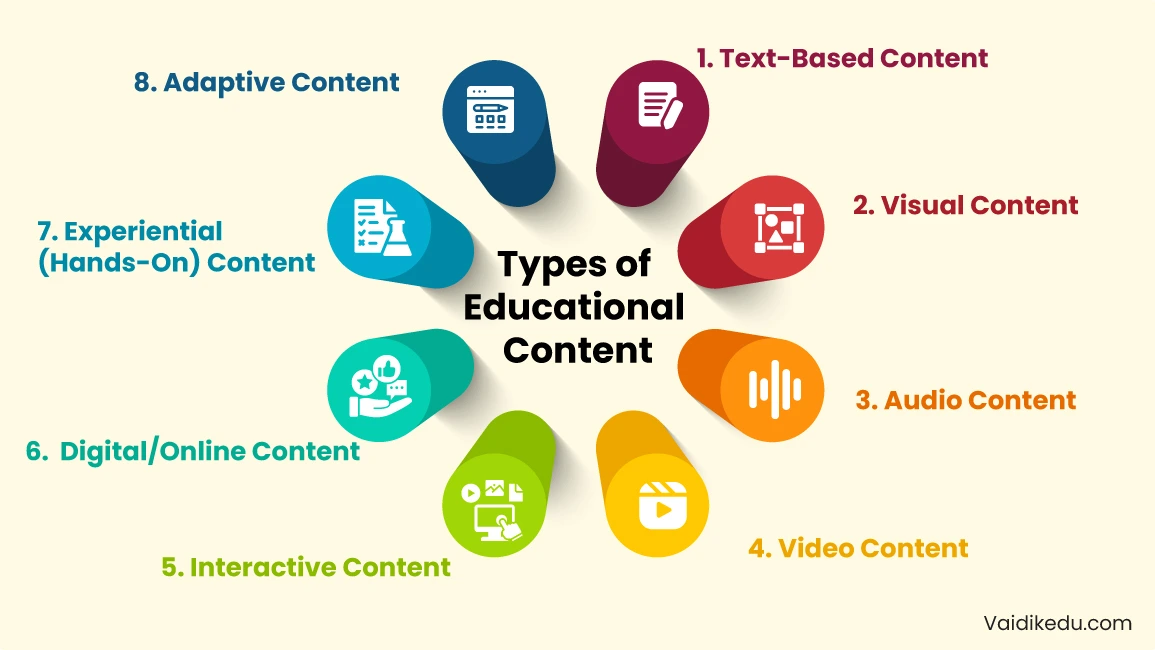
Educational content comes in different forms depending on how it is delivered and how learners interact with it. Each type supports learning uniquely.
1. Text-Based Content
It is the most traditional form of educational content. This is the most traditional form of educational content. Examples of text-based content include textbooks, articles, notes, and e-books. It is useful for building foundational knowledge and a detailed understanding.
2. Visual Content
In this type of educational content, images are used to explain concepts. Examples include diagrams, charts, infographics, and illustrations. It helps learners understand complex ideas quickly and clearly.
3. Audio Content
This educational content involves learning through listening. Examples include podcasts, recorded lectures, and audiobooks. It is helpful for auditory learners and learning on the go.
4. Video Content
One of the most popular modern formats in today’s world is video content. It enables quick and easy access to the education curriculum anywhere and at any place. It can be beneficial in terms of the students and make them aware of the new and latest techniques and ways, which help them to learn conceptually. Examples include educational videos, tutorials, and online lectures. It combines visuals and audio, making learning more engaging and easier to understand.
5. Interactive Content
This type actively involves the learner. It enables creative learning, problem-solving abilities and thought processes among the students. Examples include quizzes, simulations, games, and virtual labs. It improves engagement and helps reinforce learning through practice.
6. Digital/Online Content
Digitalisation in the education curriculum has created an impact in the education field. In this, the educational content is delivered through the internet from any point and anywhere in the world. The examples include e-learning platforms, mobile apps, and online courses. It allows flexible, self-paced learning anytime and anywhere.
7. Experiential (Hands-On) Content
In this type, the educational content involves learning by doing. It means learning can be activity-based, role-playing and real-life activities. Examples include experiments, projects, role-playing, and real-life activities. It helps learners apply knowledge in practical situations.
8. Adaptive Content
This type adjusts according to the learner’s level and progress. Examples include personalised learning platforms and AI-based tools. It ensures that each learner gets content suited to their needs.
Effective Types of Educational Content
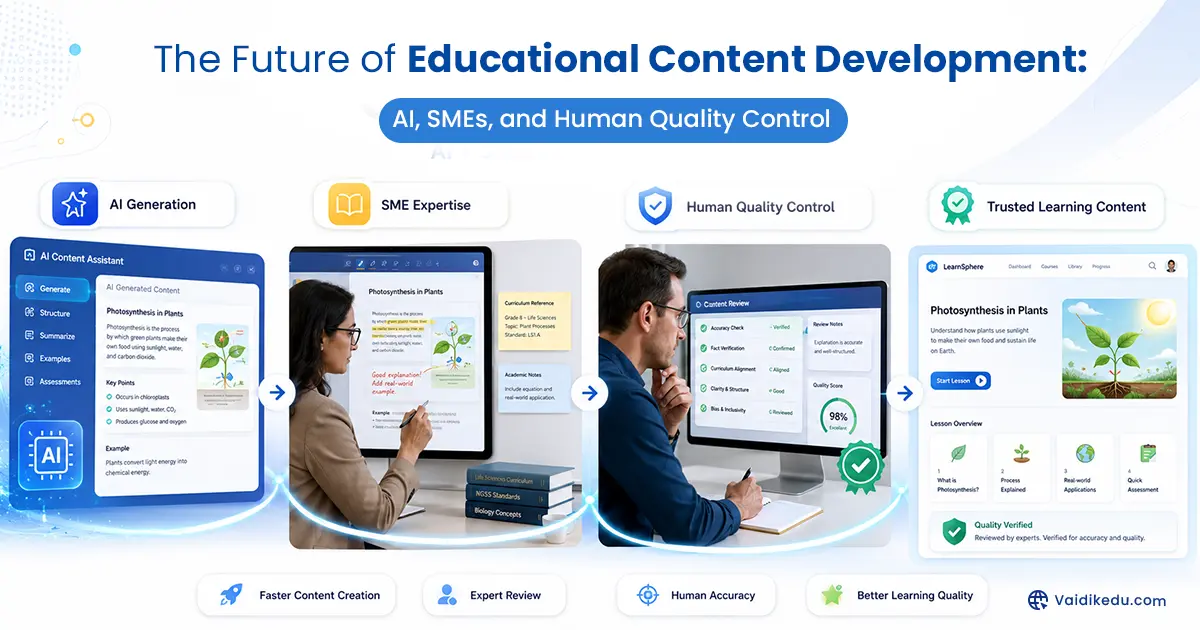
Educational content has proven to be highly effective in engaging learners and facilitating knowledge retention. Whether you are an educator, instructional designer, or content creator, incorporating these formats into your teaching materials can greatly enhance your audience’s learning experience
- Adaptive Learning Modules – It is a type of educational content that adjusts itself according to a learner’s needs, level, and progress. Instead of giving the same material to everyone, it personalises learning for each student.
Thus, in simple terms, the system “learns about the learner” and then teaches accordingly.
- Immersive Multimedia Lessons – It is a type of educational content that combines multiple media elements such as video, audio, animation, and interactivity to create a highly engaging and realistic learning experience.
Thus, in simple terms, they allow students to “experience learning” rather than just read or listen to it.
- Gamified Learning – A type of educational content that uses game elements in learning to make it more engaging, fun, and motivating.
Thus, in simple terms, it turns learning into a game-like experience.
Importance of Educational Content
Educational content matters and is important because it
1. Provides Knowledge and Understanding
Educational content provides structured and accurate information, helping learners understand concepts clearly instead of learning randomly.
2. Develops Critical Thinking
Educational content encourages learners to analyse, question, and solve problems and not just memorise facts, which is essential for real-world decision-making.
3. Builds Essential Skills
Educational content enables learners to develop key skills such as communication, problem-solving, creativity, and digital literacy.
4. Ensures Organised Learning
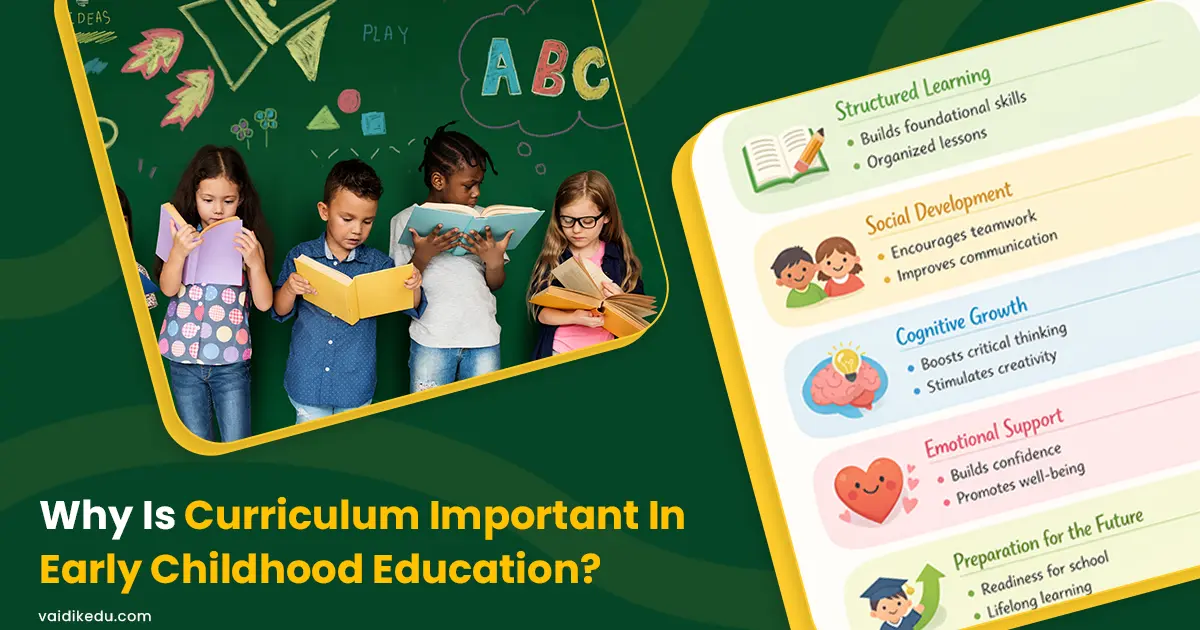
Educational content creates a clear path for learning by organising topics in a logical sequence, and thus, makes education more effective and systematic.
5. Prepares for Real Life and Careers
Educational content connects knowledge to practical applications and helps learners with future jobs and everyday challenges. These provide the best knowledge to make correct decisions
6. Promotes Engagement and Curiosity
Interesting and interactive content keeps learners motivated and encourages them to explore and learn more. This built up curiosity and innovation in the learners to become independent decision makers.
7. Supports Equal Learning Opportunities
Standardised content assures that all learners have access to the same quality of education, regardless of background.
8. Encourages Lifelong Learning
Good educational content builds curiosity and a habit of continuous learning beyond the classroom.
Goals of educational content
The goals of educational content are to guide effective learning, develop skills, and shape well-rounded individuals. It is designed not just to inform, but to help learners grow intellectually, socially, and practically.
Some of the goals of Educational Content are
1. To Provide Knowledge and understanding
The primary goal is to deliver accurate and meaningful information about different subjects, helping learners understand key concepts. Beyond memorisation, educational content aims to help learners truly understand ideas and apply them in different situations and in practical life.
2. To Build Critical Thinking Skills
Educational content helps learners gain real-life skills such as communication, decision-making, and problem-solving and encourages learners to analyse, evaluate, and solve problems independently.
3. To Encourage Creativity and promote learning
The correct and meaningful content inspires learners to think creatively, explore new ideas, and innovate. Good content engages learners through activities, discussions, and interactions, making learning more effective.
4. To Support Personal Growth and future challenges
Educational content equips learners with the knowledge and skills needed for higher education, careers, and everyday life. It helps in shaping values, attitudes, confidence, and social behaviour.
5. To Ensure Inclusive Learning to Foster Lifelong Learning
To meet the needs of different learners and provide equal opportunities for all, it also encourages curiosity and a continuous desire to learn beyond formal education.
Therefore, the main goal of educational content is to educate, engage, and empower learners to succeed in both academic and real-world settings.
Impact of content education
- Improves Learning Outcomes with the help of high-quality educational content and makes concepts easier to understand. This leads to better academic performance and deeper knowledge.
- Enhances Critical Thinking and encourages learners to question, analyse, and solve problems, helping them become independent thinkers.
- Builds Confidence when learners understand content clearly. As a result, the learner feels more confident in their abilities and participation.
- Develops Life Skills, which help to develop communication, decision-making, creativity, and problem-solving skills that are essential in daily life.
- Increases Engagement through interactive and interesting content, keeps learners motivated, making learning enjoyable rather than stressful.
- Promotes Digital Literacy with modern digital content, learners become comfortable using technology, which is crucial in today’s world.
- Supports Inclusive Education through well-designed content that caters to different learning styles and abilities, so that all learners can benefit.
- Encourages Lifelong Learning with good content that sparks curiosity and builds a habit of continuous learning beyond school.
- Shapes, attitudes, and values influence how learners think about society, ethics, and responsibilities, helping in character development.
- Prepares for Future Opportunities to equip learners with the knowledge and skills needed for higher education, careers, and real-world challenges.
Benefits of content education
1. Makes Learning Clear and Structured – Educational content logically organises information. It makes it easier for learners to understand and follow.
2. Improves Knowledge Retention – Well-presented content is visual and interactive, helping learners to remember concepts for a longer time.
3. Enhances Engagement – Interesting and interactive content keeps learners motivated and actively involved in the learning process. Interactivity helps learners stay focused. Therefore, learning by doing always leads to higher retention than learning by reading alone.
4. Supports Different Learning Styles – Educational content can be visual, auditory, or hands-on, helping all types of learners understand better.
5. Builds Important Skills – It helps develop communication, critical thinking, creativity, and problem-solving skills.
6. Provides Flexibility in Learning – Digital educational content allows learners to study anytime and at their own pace.
7. Encourages Independent Learning – Learners can explore topics on their own, building confidence and responsibility for their learning.
8. Prepares for Exams and Careers – Educational content aligns with academic goals and also builds skills needed for future jobs.
9. Promotes Equal Access to Education – Online and standardised content makes learning accessible to a wider group of people.
10. Saves Time and Effort – Organised and ready-to-use content helps both teachers and students save time in preparation and study.
Conclusion
Educational content is the foundation of effective learning, as it shapes what learners understand, how they think, and how they apply knowledge in real life. It not only provides information but also develops critical thinking, skills, values, and confidence.
In a rapidly changing world, well-designed educational content ensures that learners are prepared for academic success, future careers, and lifelong learning. Ultimately, it plays a vital role in building informed, capable, and responsible individuals who can contribute positively to society.