


Education is no longer restricted by geographical boundaries. Educational publishers, EdTech companies, universities, schools, and online learning platforms are increasingly expanding their services into international markets.
However, delivering the same educational materials to learners across different countries requires more than simply translating content into another language.
Learning materials must reflect regional languages, cultural expectations, educational standards, curriculum requirements, and learner preferences. This is where educational content localization services become essential.
Educational content localization involves adapting textbooks, eLearning courses, digital learning resources, assessments, instructional materials, and multimedia content to meet the needs of learners in specific geographical markets.
For organizations planning international expansion, professional educational content localization helps create relevant, understandable, and consistent learning experiences across different regions.
Whether an EdTech company is introducing an online learning platform in the United States, a publisher is adapting textbooks for the United Kingdom, or a university is developing multilingual academic resources, localization plays an important role in making educational content accessible to international audiences.
In this guide, we explore what educational content localization involves, why it matters, the services organizations need, and how businesses can prepare learning materials for global markets.
What Are Educational Content Localization Services?
Educational content localization services involve adapting educational materials to the linguistic, cultural, academic, and instructional requirements of a specific target market.
Unlike basic translation, localization considers how learners understand information within their regional and educational context.
For example, an educational publisher developing a science textbook for the United States may need to adapt its existing content before introducing it to students in Australia or the United Kingdom.
The adaptation may involve:
- Changing American English terminology to British or Australian English.
- Updating regional spelling, vocabulary, and expressions.
- Modifying examples, names, and cultural references.
- Adjusting measurement units and currency.
- Reviewing curriculum terminology and educational expectations.
- Adapting assessment instructions and question formats.
- Localizing illustrations, diagrams, and multimedia resources.
Professional educational content localization ensures that the original learning objectives and subject knowledge remain consistent while the presentation becomes suitable for the intended audience.
At Vaidik EduServices, educational content localization can be scoped across learning documents, digital courses, curriculum-related resources, assessments, multimedia assets, and other educational materials.
Why Is Educational Content Localization Important for Global Markets?
Expanding into international education markets creates opportunities for publishers, EdTech businesses, universities, and digital learning providers. However, educational content developed for one region may not automatically meet the expectations of learners in another.
Localization helps organizations address these differences.
1. Reaching International Learners
Learners have different language preferences, educational backgrounds, and levels of familiarity with specific terminology.
Providing localized educational materials helps organizations make their learning resources more understandable and relevant to different audiences.
For example, an online learning platform entering Spanish-speaking markets may need to localize its course content, assessment instructions, video subtitles, and learner-facing communication.
2. Improving Learner Engagement
Educational materials become more relatable when examples, scenarios, illustrations, and terminology reflect the learner’s environment.
Culturally relevant content can make lessons easier to understand and help learners connect theoretical concepts with familiar situations.
3. Supporting International Business Expansion
EdTech companies and educational publishers often need to adapt existing content libraries rather than develop every resource from the beginning.
Educational content localization allows organizations to prepare existing materials for additional markets while retaining their original educational structure.
4. Maintaining Curriculum Relevance
Different countries and educational systems follow different curriculum frameworks, qualification structures, and academic expectations.
Localization can include reviewing learning objectives, subject terminology, assessment requirements, and curriculum references against the specifications provided for the target market.
Explore our curriculum development services to understand how structured curriculum solutions can support educational content projects.
5. Creating Consistent Multilingual Learning Experiences
A digital course may contain lessons, videos, downloadable resources, interactive activities, quizzes, and assessments.
If only the main lesson text is translated, learners may encounter inconsistent terminology or instructions elsewhere in the course.
A coordinated localization process helps maintain consistency across all learning components.
Educational Content Localization vs. Translation: What Is the Difference?
Educational translation and educational content localization are related but different processes.
Translation focuses primarily on transferring the meaning of written or spoken content from one language to another. Localization goes further by adapting the material to regional, cultural, educational, and learner-specific requirements.
Aspect | Educational Translation | Educational Content Localization |
Language | Translates content into another language | Adapts language to the target audience |
Cultural references | Generally preserves original references | Reviews and adapts relevant references |
Examples | May retain original examples | Can replace region-specific examples |
Curriculum | Translates existing curriculum terminology | Reviews target-market academic requirements |
Assessments | Translates questions and instructions | Reviews language, context, and assessment meaning |
Visual content | May retain original visuals | Adapts visuals where necessary |
Learning experience | Focuses on language accuracy | Considers the complete learner experience |
For example, translating a mathematics worksheet from American English into British English may require only a few language changes.
However, adapting the same worksheet for a different curriculum may require additional adjustments to terminology, measurement conventions, examples, question instructions, and learning objectives.
Therefore, organizations looking for international educational content solutions should consider localization rather than relying exclusively on direct translation.
Types of Educational Content That Require Localization
Educational content localization can cover different learning formats, subjects, and digital platforms.
The scope depends on the source materials, target languages, learner requirements, and intended delivery environment.
1. Textbook and Educational Book Localization
Textbooks are widely used by schools, universities, educational publishers, and learning institutions.
Localizing textbooks requires careful attention to subject terminology, explanations, examples, illustrations, and academic references.
Common materials include:
- K–12 textbooks and student books.
- Teacher guides and instructional manuals.
- Mathematics and science textbooks.
- Language learning materials.
- Workbooks and practice books.
- Academic reference materials.
- Digital textbooks and eBooks.
Professional textbook localization helps educational publishers prepare learning resources for different regional audiences while maintaining the original subject knowledge.
2. eLearning Course Localization
eLearning localization involves adapting online courses and digital learning modules for learners in different languages and geographical markets.
A complete localization project may include:
- Online course descriptions and lesson content.
- Module introductions and learning objectives.
- Interactive activities and knowledge checks.
- Course navigation and learner instructions.
- Video scripts and subtitles.
- Downloadable worksheets and presentations.
- Assessment questions and feedback.
- On-screen text and supporting graphics.
Organizations can combine instructional design services with eLearning localization to maintain instructional consistency when adapting courses for international learners.
3. Curriculum Localization and Adaptation
Curriculum localization involves adapting existing curriculum-related materials to the academic requirements and educational context of a target market.
Different countries follow different curriculum frameworks, subject structures, and qualification systems.
For example:
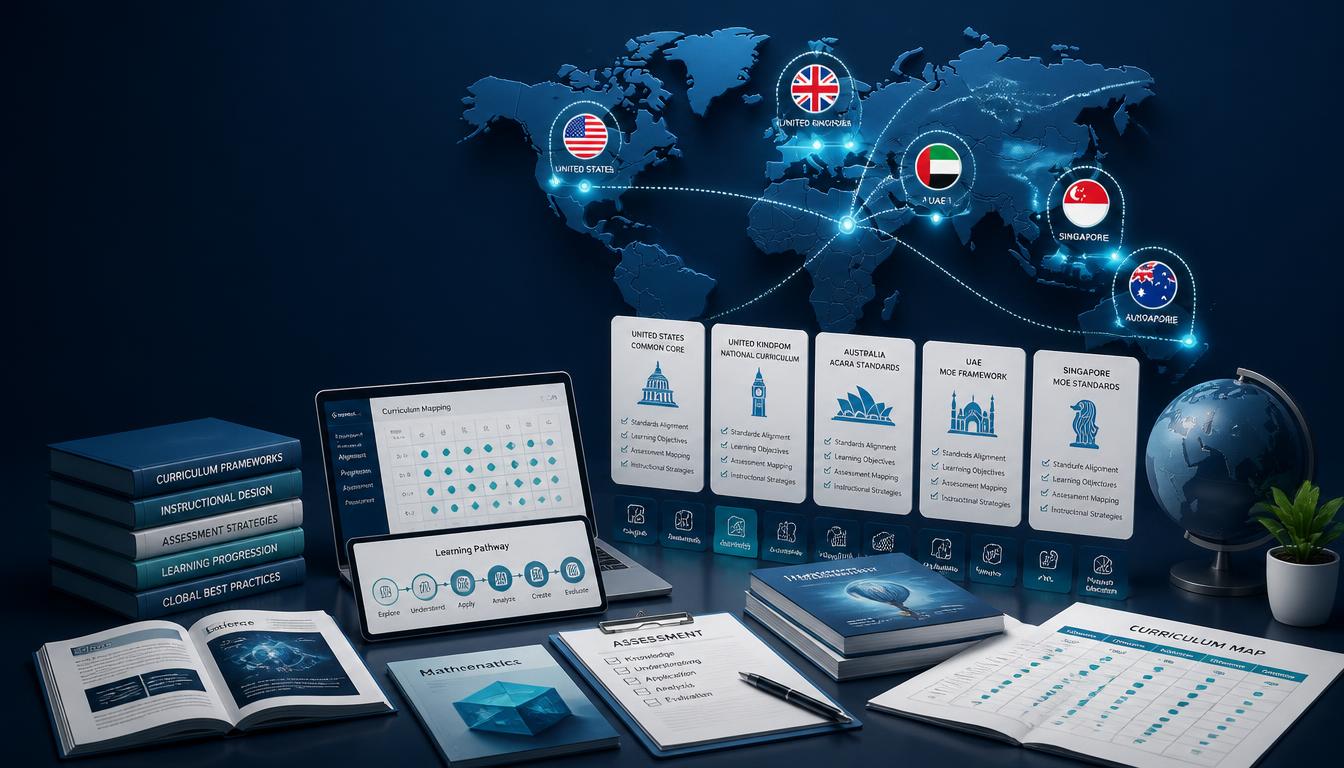
- United States: Common Core and NGSS.
- United Kingdom: GCSE and A-Level specifications.
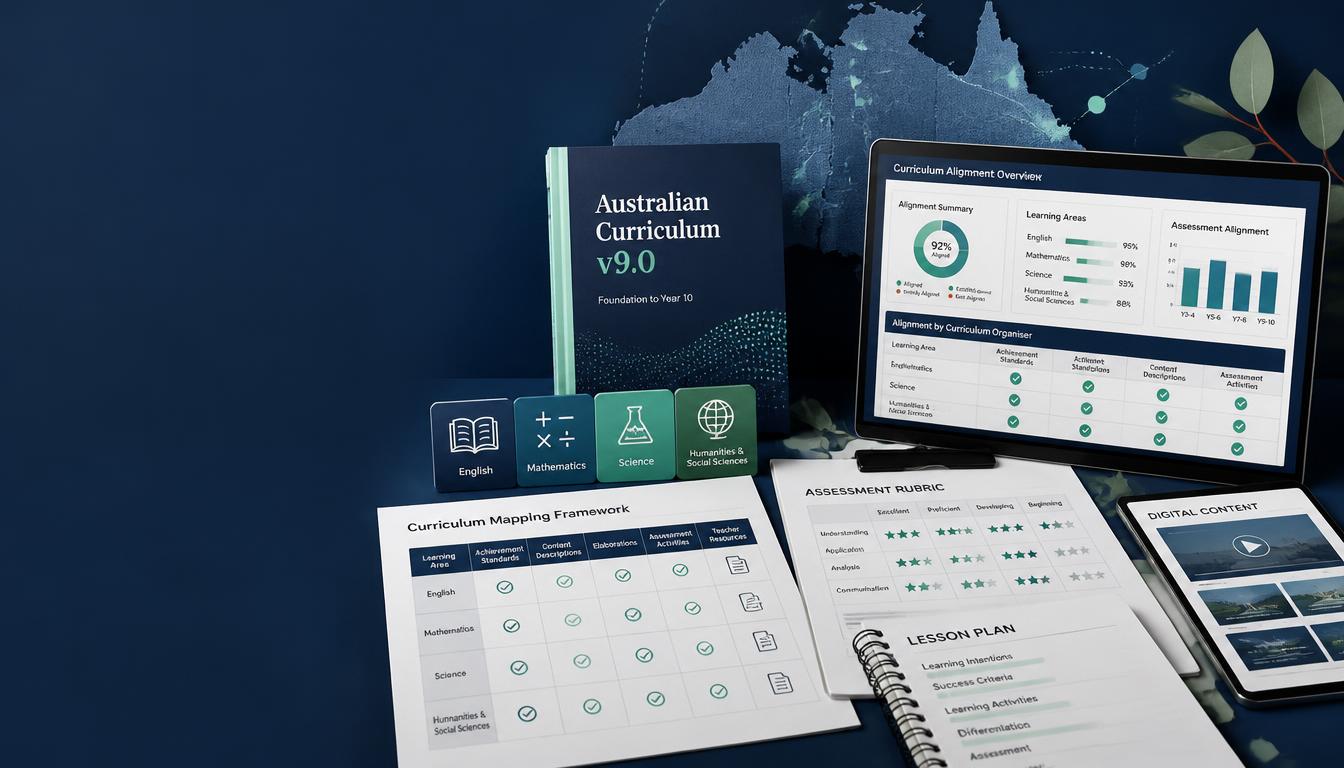
- Australia: Australian Curriculum.
- International education: IB and Cambridge International.
Curriculum adaptation may involve:
- Reviewing learning objectives.
- Updating curriculum terminology.
- Modifying subject-specific examples.
- Reviewing grade-level expectations.
- Adapting teaching and learning resources.
- Mapping learning outcomes against supplied standards.
- Reviewing assessment coverage.
The objective is to ensure that localized learning materials reflect the intended academic requirements without unnecessarily changing their original educational purpose.
- Educational Assessment and Question Bank Localization
Assessments are an important component of educational content because they evaluate students’ knowledge, skills, and understanding.
Translating assessment materials without considering their original meaning can introduce ambiguity or change the intended difficulty.
Assessment localization may include:
- Multiple-choice questions (MCQs).
- Short-answer and long-answer questions.
- Question banks and practice tests.
- Answer keys and explanations.
- Marking schemes and grading rubrics.
- Assessment instructions.
- Feedback and evaluation criteria.
- Digital quizzes and examinations.
Each question should be reviewed for linguistic clarity, subject terminology, contextual relevance, and consistency with the intended learning objective.
Explore our assessment development services for additional support with educational assessments and question bank projects.
5. Multimedia and Educational Video Localization
Modern learning experiences frequently combine written content with videos, audio, animations, and interactive presentations.
Multimedia localization ensures that these components remain understandable and relevant across language markets.
Potential deliverables include:
- Educational video script translation.
- Subtitle and caption localization.
- Narration and voice-over scripts.
- Presentation text adaptation.
- Animated learning content.
- Audio learning resources.
- Infographics and instructional visuals.
- On-screen text and graphics.
Organizations should consider subtitle length, narration timing, visual layout, and text expansion when preparing educational videos for different languages.
6. Digital Learning Resource Localization
Digital educational resources support independent learning, classroom teaching, online courses, and blended education.
These resources may require language and contextual adaptation before they are introduced into new markets.
Examples include:
- Digital worksheets.
- Study guides and revision materials.
- Educational PDFs.
- PowerPoint presentations.
- Interactive learning resources.
- Downloadable workbooks.
- Teacher resource documents.
- Online study materials.
A structured localization workflow helps ensure that these resources remain consistent across different languages and formats.
Key Elements of a Successful Educational Content Localization Strategy
Successful localization requires more than language conversion. Organizations should consider several elements before adapting educational content for international markets.
Language Accuracy and Regional Terminology
Educational terminology can vary between countries, even when the same language is used.
For example, American English and British English use different spellings and vocabulary in several contexts.
Localization teams should establish appropriate language conventions and terminology references before production begins.
Cultural and Contextual Adaptation
Examples, illustrations, names, scenarios, and references should be reviewed for their suitability in the target market.
A science lesson or mathematics problem developed for one country may contain familiar objects, locations, or situations that are less recognizable to learners elsewhere.
Cultural adaptation helps make these examples more relevant without changing the intended learning objective.
Curriculum and Academic Alignment
Educational content should reflect the curriculum specifications and academic requirements defined for the intended market.
Organizations may need to review:
- Grade-level expectations.
- Subject-specific terminology.
- Learning objectives.
- Curriculum references.
- Qualification requirements.
- Assessment formats.
- Academic conventions.
Where curriculum alignment is required, it should be treated as a defined project activity rather than assumed to be included in translation.
Visual and Multimedia Adaptation
Images, diagrams, animations, videos, and interactive elements contribute to the overall learning experience.
Localization may require updating visual references, captions, labels, text placement, and other multimedia components.
Accessibility and Readability
Localized content should remain readable and accessible to its intended audience.
Depending on the project, accessibility considerations may include:
- Clear heading structures.
- Readable fonts and text layouts.
- Alternative text for relevant images.
- Captions and transcripts.
- Accessible document structures.
- Appropriate language complexity.
Organizations can also explore educational content quality assurance services to review content accuracy, consistency, accessibility requirements, and localization quality.
Educational Content Localization Challenges and How to Overcome Them
Although localization offers opportunities for international expansion, organizations may encounter several challenges during implementation.
1. Maintaining Subject-Matter Accuracy
Educational content often contains specialized terminology, technical explanations, formulas, and subject-specific concepts.
A literal translation may not accurately communicate the original concept.
How to address it: Use approved subject glossaries, relevant specialist review, and quality checks against the original source material.
2. Managing Different Curriculum Requirements
The same subject may be taught differently across educational systems.
How to address it: Define the target curriculum requirements and learner level before adapting the content. Conduct curriculum mapping where required.
3. Handling Text Expansion in Digital Courses
Translated text may be longer than the original language. This can affect buttons, diagrams, captions, interactive activities, and course layouts.
How to address it: Include text expansion and formatting checks in the localization workflow and review the localized content in its intended digital environment when required.
4. Maintaining Consistency Across Large Content Libraries
Large educational publishers and EdTech companies may manage thousands of lessons, questions, videos, and learning resources.
How to address it: Develop terminology glossaries, language style guides, reusable content references, and standardized quality assurance processes.
5. Managing Localization Costs and Timelines
Localization costs can increase when projects involve multiple languages, complex multimedia, specialized subjects, and extensive review requirements.
How to address it: Prioritize high-value content, define deliverables clearly, establish realistic production schedules, and plan for reusable terminology and translation resources.
Our Educational Content Localization Process
A structured workflow helps organizations maintain language quality, academic accuracy, and consistency throughout the localization project.
At Vaidik EduServices, localization projects can be organized around the following stages, depending on the agreed requirements.
Step 1: Project Discovery and Content Assessment
The first stage involves reviewing the source content and understanding the project’s requirements.
This includes:
- Content type and subject area.
- Source and target languages.
- Intended learner audience.
- Content volume.
- Source file formats.
- Required delivery formats.
- Project timeline and review expectations.
Step 2: Language and Localization Planning
After reviewing the project requirements, the localization team establishes the language and adaptation guidelines.
These may include:
- Regional spelling conventions.
- Approved subject terminology.
- Language style guides.
- Cultural adaptation requirements.
- Curriculum specifications.
- Formatting instructions.
Step 3: Translation and Content Adaptation
Educational materials are translated and adapted according to the agreed localization requirements.
The process focuses on preserving the original educational meaning, subject accuracy, learning objectives, and instructional intent.
Step 4: Cultural and Academic Review
The localized materials are reviewed for cultural suitability, terminology, academic context, and consistency with the project brief.
Additional subject-matter review can be included where required.
Step 5: Linguistic and Content Quality Assurance
Quality assurance helps identify potential issues before the localized materials are delivered.
The review may cover:
- Grammar and spelling.
- Translation accuracy.
- Terminology consistency.
- Content completeness.
- Cultural relevance.
- Assessment clarity.
- Formatting and layout.
- Accessibility requirements within scope.
Step 6: Final Formatting and Delivery
The approved localized content is prepared in the agreed formats.
Deliverables may include DOCX, PDF, PPTX, digital learning assets, subtitle files, or other project-specific formats.
Any required technical validation or LMS integration should be defined separately in the project scope.
Which Industries Benefit from Educational Content Localization Services?
Educational content localization is valuable for organizations that develop, publish, distribute, or deliver learning materials across international markets.
Educational Publishers
Publishers can localize textbooks, digital books, teacher resources, workbooks, and educational reference materials for different regional markets.
EdTech Companies
EdTech businesses can adapt their online learning platforms, course libraries, question banks, and educational resources to support international users.
Universities and Higher Education Institutions
Universities can localize digital course materials, academic resources, programme information, and learning content for multilingual delivery.
Explore our higher education content development services for academic content production and related learning solutions.
Schools and Educational Institutions
Schools and education providers can adapt teaching materials, worksheets, digital resources, and assessment content for their learner communities.
Corporate Training and Learning Providers
Organizations delivering professional development and employee training can localize training modules, instructional resources, and digital learning programmes for international teams.
Online Learning Platforms
Digital learning platforms can adapt their course descriptions, user instructions, multimedia assets, assessments, and educational resources for different language audiences.
Educational Content Localization for Different Global Markets
International markets have different language conventions, educational systems, and learner expectations. Organizations should consider these differences before introducing educational content into a new region.
United States
Educational content intended for the US market may require American English, US measurement conventions, and references to applicable academic frameworks.
Common considerations include Common Core, NGSS, state-specific standards, and relevant educational terminology.
United Kingdom
UK-focused learning materials may require British English, regional spelling conventions, and alignment with the intended GCSE, A-Level, or other qualification specifications.
Australia
Australian educational resources may require Australian English, metric measurement conventions, and consideration of the Australian Curriculum and relevant state or territory requirements.
United Arab Emirates
The UAE education market includes different educational systems, international curricula, and multilingual learning environments.
Depending on the project, localization may involve English and Arabic content, regional examples, and relevant curriculum requirements.
Singapore
Educational materials intended for Singapore may require consideration of local academic terminology, the national education context, and relevant learning requirements.
Other International Markets
Organizations expanding into additional regions may need localization support for European, Asian, African, and other international education markets.
The exact language combinations, specialist coverage, and curriculum requirements should be confirmed during project planning.
How to Choose the Right Educational Content Localization Company
Selecting an educational content localization company is an important decision for organizations managing large learning content libraries or expanding into international markets.
Before choosing a localization partner, consider the following factors.
1. Experience in Educational Content
Choose a provider that understands educational materials, academic terminology, learning objectives, and instructional requirements.
2. Language and Subject Expertise
Localization requires appropriate language expertise and an understanding of the subject matter.
Check how the provider plans to manage specialized terminology and subject-specific reviews.
3. Curriculum Adaptation Capabilities
If your project involves curriculum-based materials, determine whether the provider can support curriculum review, mapping, and adaptation according to your requirements.
4. eLearning and Digital Content Experience
For online courses and digital learning platforms, evaluate the provider’s ability to work with different content formats and multimedia components.
5. Quality Assurance Process
Ask about the provider’s review methodology, terminology management, linguistic checks, and final delivery criteria.
6. Scalability and Project Management
For large educational content libraries, consider whether the provider can manage multiple subjects, languages, content formats, and review stages within an agreed production workflow.
7. Clear Project Scope and Pricing
Request a detailed proposal covering language combinations, content volume, deliverables, quality assurance, technical requirements, revisions, and timelines.
Why Choose Vaidik EduServices for Educational Content Localization?
Vaidik EduServices supports educational publishers, EdTech companies, universities, and learning organizations with educational content and digital learning solutions.
Our approach to educational content localization focuses on adapting existing learning resources while preserving their educational meaning, subject accuracy, and intended learning outcomes.
Organizations can discuss localization requirements across different content types and formats, including:
- Educational content translation and adaptation.
- eLearning course localization.
- Curriculum-related content adaptation.
- Educational assessment and question bank localization.
- Digital learning resource localization.
- Educational video scripts and multimedia content.
- Linguistic and educational content quality assurance.
- Terminology and glossary management.
We can also support broader educational content requirements through educational content development services, instructional design solutions, and curriculum alignment services.
Whether you are preparing a single digital course for an international audience or adapting a large educational content library, project scope and deliverables can be planned according to your requirements.
Frequently Asked Questions
Educational content localization services involve adapting learning materials to the language, culture, academic requirements, and expectations of a specific target market. These services may include educational translation, curriculum adaptation, eLearning localization, assessment localization, multimedia adaptation, and quality assurance.
Localization makes educational materials more relevant and understandable for learners in different regions. It helps organizations adapt language, terminology, examples, curriculum references, and digital learning resources when expanding into international markets.
Educational translation converts content from one language into another while preserving its meaning. Localization goes further by adapting cultural references, regional terminology, educational context, examples, visual elements, and other learning components for the target audience.
eLearning localization services adapt online courses and digital learning materials for different language and regional audiences. They may include course translation, module adaptation, multimedia localization, video subtitles, learner instructions, interactive activities, and assessment localization.
Yes. Educational content can be adapted for multiple international markets, including the United States, United Kingdom, Australia, UAE, Singapore, and other regions. Each market may require different language conventions, curriculum references, examples, and educational terminology.