
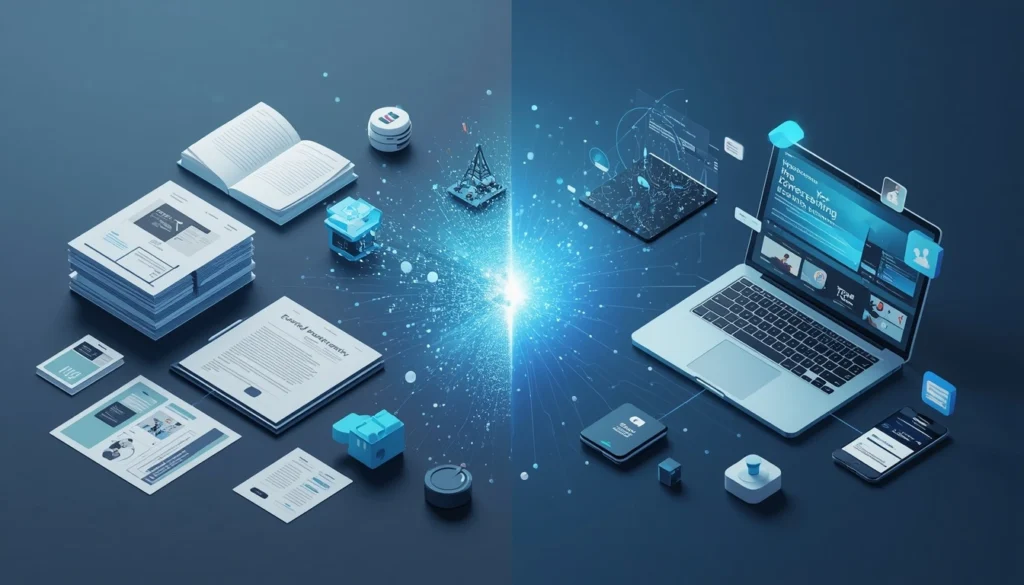
Organizations invest significant time and resources in developing training materials, instructor-led courses, classroom presentations, educational manuals, and learning resources.
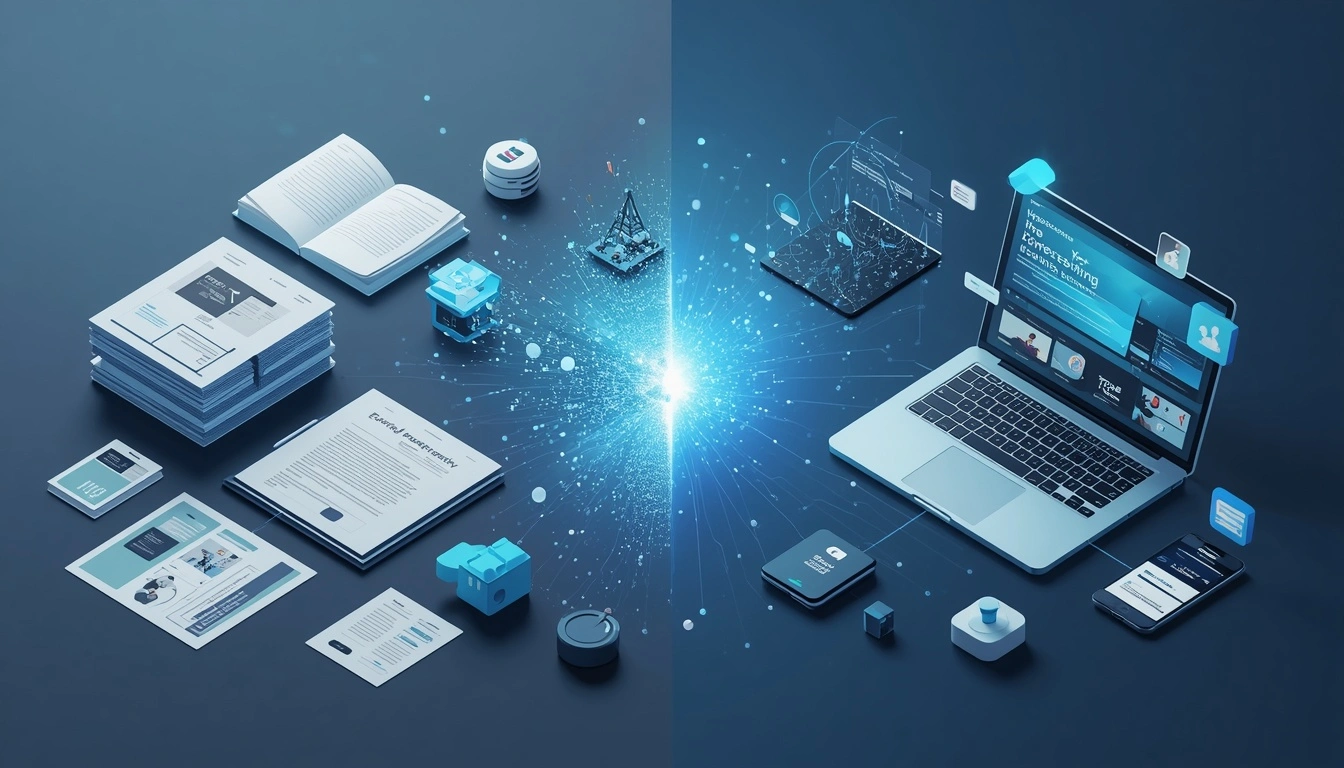
However, traditional training formats may not always meet the expectations of today’s digital learners. As organizations move towards flexible, scalable, and technology-driven learning environments, converting existing training materials into digital courses has become increasingly important.
Online course conversion services help businesses, educational institutions, publishers, and eLearning providers transform existing learning content into engaging, interactive, and accessible digital learning experiences.
Instead of developing courses from scratch, organizations can repurpose their existing training materials into structured eLearning modules that learners can access anytime and from anywhere.
Whether you have PowerPoint presentations, PDF documents, classroom lectures, instructor-led training (ILT) materials, or printed learning resources, professional course conversion services can help turn them into effective online training programs.
In this guide, we explore how online course conversion works, its benefits, different types of course conversion, technologies involved, and how to choose the right eLearning course conversion partner.
What Are Online Course Conversion Services?
Online course conversion services involve transforming existing educational or corporate training materials into digital learning courses that can be delivered through a Learning Management System (LMS), learning platform, or online training environment.
The process involves more than simply transferring documents into a digital format. It includes instructional design, content restructuring, multimedia integration, interactive learning activities, assessments, accessibility improvements, and technical development.
Professional eLearning conversion services help organizations convert traditional learning resources into structured digital courses while preserving their original learning objectives.
For example:
- PowerPoint presentations can be converted into interactive eLearning modules.
- Classroom-based training programs can become self-paced online courses.
- Instructor-led training materials can be transformed into virtual learning experiences.
- PDF manuals and educational documents can become multimedia-based digital lessons.
- Recorded training sessions can be converted into structured video-based learning modules.
- Legacy eLearning courses can be redesigned using modern authoring tools.
The objective is to create digital learning content that is engaging, accessible, scalable, and aligned with the organization’s training requirements.
Why Are Businesses and Educational Institutions Converting Existing Training into Digital Learning?
Traditional training methods can involve scheduling challenges, travel expenses, instructor availability, printing costs, and difficulties delivering consistent learning experiences across different locations.
Digital learning provides an alternative that allows organizations to distribute training content more efficiently.
Here are some reasons organizations are investing in online course conversion services.
1. Make Existing Training Materials Accessible Online
Organizations often have valuable training content that is available only in classroom presentations, printed manuals, or instructor-led sessions.
Converting these resources into online courses makes learning materials accessible through computers, tablets, and mobile devices.
2. Reduce Training Development Costs
Developing an entirely new eLearning course can require substantial time and resources. Course conversion allows organizations to reuse existing materials instead of starting from the beginning.
This can reduce content development effort while extending the value of previously created training resources.
3. Support Remote and Distributed Teams
Organizations with employees across multiple offices, countries, or time zones need flexible training solutions.
Digital courses allow employees to complete training remotely without attending the same physical training session.
4. Improve Learner Engagement
Traditional presentations and documents may not provide sufficient opportunities for interaction.
Professional course conversion incorporates videos, animations, simulations, quizzes, scenarios, and interactive activities to improve learner participation.
5. Enable Scalable Learning Programs
Once converted into digital courses, training content can be distributed to larger audiences without repeating the same instructor-led sessions.
This makes online course conversion particularly useful for growing businesses, universities, educational publishers, and global training providers.
What Types of Training Materials Can Be Converted into Online Courses?
Professional online course conversion companies can work with different types of existing educational and training resources.
The conversion approach depends on the source material, target audience, learning objectives, and preferred delivery platform.
1. PowerPoint to eLearning Conversion
PowerPoint presentations are among the most common source materials for online course development.
However, simply uploading slides to an LMS does not necessarily create an effective learning experience.
PowerPoint to eLearning conversion transforms static presentations into interactive digital courses.
The process may include:
- Converting presentation slides into structured learning modules.
- Adding voiceovers and instructional narration.
- Integrating animations and visual elements.
- Developing interactive navigation.
- Adding knowledge checks and assessments.
- Creating downloadable learning resources.
This approach is suitable for employee onboarding, product training, compliance training, academic instruction, and professional development.
2. Instructor-Led Training (ILT) to eLearning Conversion
Instructor-led training programs traditionally require learners and trainers to participate in scheduled classroom or virtual sessions.
ILT to eLearning conversion transforms these training programs into self-paced or blended digital learning experiences.
The conversion process may involve:
- Reviewing existing instructor-led training materials.
- Organizing content into digital learning modules.
- Developing scenario-based activities.
- Adding multimedia and interactive exercises.
- Creating online assessments.
- Preparing courses for LMS deployment.
Organizations can use converted ILT materials to provide consistent training across departments and geographical locations.
3. Classroom Training to Online Course Conversion
Educational institutions and training organizations can transform classroom-based teaching materials into online learning programs.
Existing lesson plans, lecture notes, presentations, worksheets, and instructor resources can be reorganized into structured digital lessons.
This is particularly useful for schools, universities, coaching providers, and professional training institutions transitioning towards online education.
4. PDF and Document to eLearning Conversion
Many organizations maintain extensive collections of PDF manuals, training guides, policy documents, and educational resources.
PDF to eLearning conversion transforms these documents into interactive learning experiences.
Converted content may include:
- Digital lessons and learning modules.
- Interactive diagrams and infographics.
- Knowledge-check questions.
- Audio and video explanations.
- Scenario-based learning activities.
- End-of-module assessments.
This makes complex information easier to understand and helps learners engage with the material more effectively.
5. Legacy eLearning Course Conversion
Older digital courses may use outdated layouts, unsupported technologies, or formats that do not work properly on modern devices.
Legacy eLearning conversion helps organizations modernize existing courses while preserving important learning content.
The process may include:
- Reviewing existing course files.
- Rebuilding outdated interactions.
- Updating visual design and navigation.
- Improving mobile responsiveness.
- Updating assessments and multimedia.
- Converting courses into modern SCORM or xAPI-compatible formats, where required.
6. Video-Based Training to Interactive eLearning
Organizations frequently use recorded webinars, classroom sessions, product demonstrations, and employee training videos.
These recordings can be converted into structured online courses by adding chapter navigation, knowledge checks, transcripts, captions, and supplementary learning activities.
This helps transform passive video consumption into a more structured learning experience.
How Does the Online Course Conversion Process Work?
A successful course conversion project requires a structured workflow that combines instructional design, content development, multimedia production, and technical implementation.
At Vaidik EduServices, a typical course conversion workflow can be organized into the following stages.
Step 1: Training Content Analysis
The first step involves reviewing the existing training materials and understanding the purpose of the course.
The development team evaluates:
- Source content and available file formats.
- Existing learning objectives.
- Target learner demographics.
- Course complexity and subject matter.
- Required level of interactivity.
- Preferred LMS and delivery requirements.
This analysis helps determine the most appropriate conversion strategy.
Step 2: Instructional Design and Content Restructuring
Existing training materials may not be organized for effective digital learning.
Instructional designers restructure the content into logical learning modules, lessons, and activities.
This stage may include:
- Defining measurable learning objectives.
- Organizing content into smaller sections.
- Removing unnecessary or repetitive information.
- Developing learner-focused explanations.
- Designing assessments and knowledge checks.
- Creating a suitable learning path.
For complex projects, organizations can also explore professional instructional design services to improve course structure and learning effectiveness.
Step 3: Visual Design and Multimedia Development
Visual presentation plays an important role in digital learning.
The next stage involves transforming static materials into visually engaging learning experiences.
Depending on project requirements, this may include:
- Custom illustrations and graphics.
- Animated explanations.
- Educational videos.
- Audio narration and voiceovers.
- Interactive diagrams.
- Screen recordings and demonstrations.
- Scenario-based visual content.
The visual design should support the learning objectives rather than distract learners from the subject matter.
Step 4: eLearning Authoring and Course Development
Once the instructional structure and visual assets are ready, the content is developed using appropriate eLearning authoring tools.
Common authoring tools include Articulate Storyline, Articulate Rise, Adobe Captivate, and other suitable eLearning development platforms.
Developers use these tools to create:
- Interactive digital lessons.
- Clickable learning activities.
- Branching scenarios.
- Knowledge checks and quizzes.
- Multimedia-based modules.
- Responsive course layouts.
The selected tool depends on the complexity, functionality, and delivery requirements of the course.
Step 5: Assessment and Interactive Learning Integration
Assessments help organizations determine whether learners understand the training material.
Converted courses may include multiple-choice questions, drag-and-drop activities, matching exercises, case studies, simulations, and scenario-based assessments.
These activities provide opportunities for learners to apply what they have learned.
Step 6: LMS Integration and SCORM/xAPI Compatibility
After development, the course is prepared for delivery through the organization’s Learning Management System.
Depending on the requirements, courses may be published in:
- SCORM 1.2.
- SCORM 2004.
- xAPI (Experience API).
- cmi5.
- HTML5-based formats.
The development team checks course tracking, completion criteria, navigation, and compatibility with the target LMS.
Step 7: Quality Assurance and Final Delivery
Before deployment, the converted course undergoes quality assurance testing.
Testing may include:
- Content accuracy and consistency.
- Functional testing of interactive elements.
- Assessment validation.
- Navigation testing.
- Mobile and tablet compatibility.
- Accessibility checks.
- LMS tracking and reporting validation.
Once the course meets the agreed project requirements, it is delivered in the required format for deployment.
What Are the Benefits of Professional eLearning Course Conversion Services?
Outsourcing course conversion to an experienced eLearning development partner provides several operational and learning-related advantages.
Cost-Effective Training Modernization
Organizations can transform existing educational and training resources without investing in complete course redevelopment.
This helps maximize the value of previously developed learning content.
Faster Digital Course Development
Existing content provides a foundation for course development.
With a defined conversion workflow, organizations can move their training programs into digital formats more efficiently than developing every course from scratch.
Consistent Learning Experiences
Digital courses help maintain consistent training standards across different departments, offices, and learner groups.
Every learner can access the same approved learning materials.
Improved Learner Engagement and Retention
Interactive elements, multimedia, and scenario-based activities can make learning more engaging and encourage active participation.
Flexible Learning Delivery
Online courses allow learners to access training according to their schedules, supporting remote, hybrid, and self-paced learning environments.
Easier Content Updates and Maintenance
Digital courses can be updated when organizational policies, educational requirements, products, or training procedures change.
This makes long-term learning content management more practical.
Which Industries Benefit from Online Course Conversion Services?
Online course conversion is relevant to organizations across multiple industries.
1. Educational Institutions and Universities
Schools, colleges, and universities can convert classroom teaching materials, academic presentations, lecture notes, and study resources into digital courses.
These resources support online education, blended learning, and distance education programs.
2. Corporate Training and Employee Development
Businesses can convert employee handbooks, onboarding presentations, compliance manuals, and professional development materials into online training courses.
Common applications include:
- Employee onboarding.
- Workplace safety training.
- Leadership development.
- Compliance training.
- Technical skills development.
- Product and process training.
3. Educational Publishers
Educational publishers often have extensive collections of textbooks, teacher guides, worksheets, and educational resources.
Converting these materials into digital learning products helps publishers expand their digital offerings and support modern learning environments.
Organizations developing these resources can also benefit from educational content development services to create and structure high-quality learning materials.
4. EdTech Companies and Online Learning Platforms
EdTech companies can convert existing educational resources into interactive digital courses for their platforms.
This can include academic lessons, test preparation materials, subject-specific learning modules, and professional training programs.
5. Healthcare and Professional Training Organizations
Healthcare organizations and professional training providers can digitize training manuals, standard operating procedures, safety instructions, and educational resources.
The conversion process should preserve technical accuracy and follow applicable industry requirements.
Online Course Conversion vs. Custom eLearning Development: What Is the Difference?
Both services help organizations create digital learning experiences, but they serve different project requirements.
Comparison Factor | Online Course Conversion | Custom eLearning Development |
Starting point | Existing training materials | New or existing learning requirements |
Content development | Reuses and restructures source content | Creates or develops content as needed |
Instructional design | Adapts existing learning materials | Designs the complete learning experience |
Development approach | Content transformation | End-to-end course development |
Best suited for | Digitizing existing training | Building new learning programs |
Typical source files | PPT, PDF, ILT, videos, manuals | Learning objectives, briefs, source materials |
Organizations should select the approach based on the condition of their existing content, learning objectives, project scope, and available resources.
In many projects, course conversion and custom eLearning development can work together to produce the desired learning experience.
What Technologies and Tools Are Used for Online Course Conversion?
Professional eLearning course conversion companies use a combination of authoring tools, multimedia software, LMS technologies, and content development platforms.
Some commonly used technologies include:
Articulate Storyline
Articulate Storyline is used to develop interactive eLearning courses with branching scenarios, quizzes, animations, and customized interactions.
Articulate Rise
Articulate Rise supports responsive course development and is useful for creating structured digital learning experiences that adapt to different screen sizes.
Adobe Captivate
Adobe Captivate supports interactive simulations, software demonstrations, responsive learning experiences, and multimedia-based course development.
Learning Management Systems (LMS)
An LMS helps organizations host, distribute, manage, and track online courses.
Common LMS platforms include Moodle, Canvas, Blackboard, and other enterprise learning systems.
SCORM and xAPI
SCORM and xAPI are widely used eLearning standards and specifications for supporting course delivery and learning activity tracking.
The appropriate format depends on the LMS and reporting requirements.
How Much Do Online Course Conversion Services Cost?
The cost of online course conversion services depends on the complexity of the source materials and the functionality required in the final course.
There is no universal price because a simple presentation conversion requires a different level of effort than converting a large instructor-led training program into interactive eLearning modules.
Important cost factors include:
1. Volume of Existing Training Content
The number of presentations, documents, videos, slides, or training hours affects the overall project scope.
2. Level of Interactivity
Basic slide-based courses generally require less development than courses featuring simulations, branching scenarios, animations, and advanced interactions.
3. Instructional Design Requirements
If the existing materials need substantial restructuring, content rewriting, or learning objective development, additional instructional design effort may be required.
4. Multimedia and Animation Requirements
Custom graphics, video production, voiceovers, and animation can influence project costs.
5. LMS and Technical Requirements
SCORM or xAPI publishing, LMS integration, tracking configuration, and technical testing can affect the overall budget.
6. Accessibility and Localization
Captioning, transcripts, accessibility improvements, and multilingual course adaptation may add to the project scope.
For an accurate estimate, organizations should share their source materials, preferred output format, learner requirements, and expected course functionality with the service provider.
How to Choose the Right Online Course Conversion Company?
Selecting the right eLearning course conversion partner is important for ensuring quality, consistency, and successful digital course delivery.
Before selecting a service provider, consider the following factors.
1. Experience in eLearning Development
Choose a company with experience in converting PowerPoint presentations, instructor-led training, PDF documents, and legacy eLearning courses.
2. Instructional Design Expertise
A reliable partner should understand how to transform existing information into learner-focused digital experiences.
3. Knowledge of eLearning Authoring Tools
Check whether the development team has experience with relevant tools such as Articulate Storyline, Articulate Rise, and Adobe Captivate.
4. SCORM and xAPI Knowledge
The service provider should understand course publishing, LMS compatibility, and learning activity tracking requirements.
5. Quality Assurance Capabilities
Ask about the company’s quality assurance process, including content accuracy, functional testing, accessibility, and device compatibility.
6. Scalability and Project Management
If you need to convert multiple courses, select a partner capable of managing larger projects with consistent workflows and delivery standards.
7. Customization and Ongoing Support
Your eLearning partner should be able to adapt courses to your branding, learner needs, technology requirements, and future content updates.
Why Choose Vaidik EduServices for Online Course Conversion Services?
Vaidik EduServices provides educational content development and eLearning solutions to organizations looking to create, transform, and improve digital learning experiences.
We understand that existing training content represents a valuable investment. Our approach focuses on helping organizations make better use of these resources by transforming them into structured and engaging digital learning experiences.
Our capabilities include:
- PowerPoint to eLearning conversion: Transforming static presentations into interactive digital courses.
- ILT to eLearning conversion: Converting instructor-led training programs into self-paced digital learning.
- PDF to eLearning conversion: Turning documents and training manuals into structured online lessons.
- Instructional design: Organizing existing content into learner-focused modules and learning paths.
- Interactive course development: Incorporating quizzes, scenarios, animations, and multimedia.
- eLearning content development: Creating and enhancing digital educational and training materials.
- SCORM and xAPI publishing: Preparing courses for compatible LMS environments based on project requirements.
- Quality assurance: Reviewing content, interactions, functionality, and course performance.
Whether you are an educational publisher, university, corporate training provider, or EdTech company, Vaidik EduServices can support your digital learning transformation requirements.
Looking to convert your existing training materials into digital courses? Contact Vaidik EduServices to discuss your project requirements and explore a suitable online course conversion solution.
Conclusion
Transforming existing training materials into digital learning is an effective way for organizations to modernize their training programs, improve content accessibility, and support flexible learning environments.
Professional online course conversion services help businesses, educational institutions, publishers, and EdTech companies turn presentations, PDFs, classroom resources, and instructor-led training materials into interactive digital courses.
By combining instructional design, multimedia development, eLearning authoring tools, LMS compatibility, and quality assurance, organizations can extend the value of their existing learning content.
Vaidik EduServices helps organizations transform existing educational and training resources into structured digital learning experiences. Get in touch with our team to discuss your online course conversion requirements.
Frequently Asked Questions
Online course conversion services transform existing training materials, such as PowerPoint presentations, PDF documents, classroom lessons, and instructor-led training programs, into digital learning courses that can be delivered through an LMS or online learning platform.
ILT to eLearning conversion is the process of transforming instructor-led training materials into digital learning courses. These courses can include interactive lessons, assessments, videos, and self-paced learning activities.
Course conversion transforms existing educational or training materials into digital courses. Custom eLearning development may involve creating new learning content, instructional design, multimedia, assessments, and complete digital learning experiences.
Outsourcing provides access to instructional designers, eLearning developers, multimedia specialists, and quality assurance professionals. It can help organizations manage large conversion projects while focusing internal resources on their core operations.