
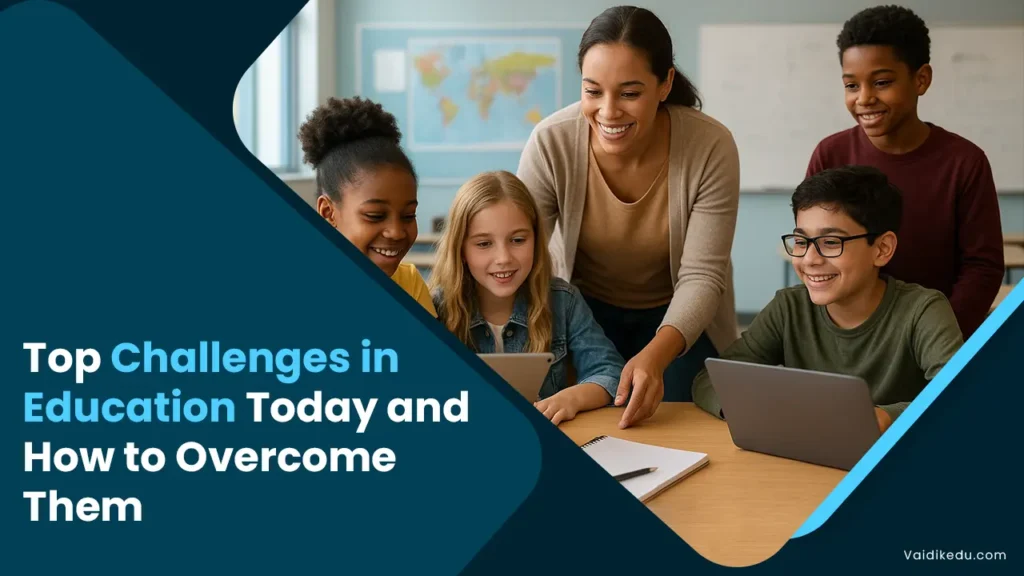
Education is the root cause of both individual and societal growth; however, this sector in modern times faces significant challenges. Challenges like unequal access to quality learning resources, the effects of technology, and the shifting modes of teaching all pose difficulties, ranging from diverse and multifaceted ones.
Students, teachers, and institutions all bear the brunt, requiring innovation for a more accessible, effective, and sustainable education system. This blog looks at the greatest challenges in education today and proposes solutions to address them.
Introduction To Education Challenges
Education is one of the strongest foundations for individual growth, economic development, and social progress. Yet education systems around the world continue to face complex challenges that affect students, teachers, schools, and education providers.
In 2026, these challenges extend beyond access to classrooms and learning materials. Teacher shortages, learning gaps, digital inequality, student mental health, outdated curricula, artificial intelligence, rising education costs, and changing workforce expectations are reshaping how education is delivered.
These challenges are also interconnected. Limited access to technology can widen learning gaps, teacher shortages can affect instructional quality, and outdated curricula can leave students without the skills they need for higher education and future careers.
This guide explores the 15 biggest challenges in education in 2026, their impact on learners and institutions, and practical strategies that schools, governments, educators, and education providers can use to build more accessible, effective, and future-ready education systems.
Therefore, stakeholders have to come together and redefine education on principles of access, adaptability, and sustainability.
Top Challenges in Education
1. Unequal Access To Quality Education
Quality education is still needed, due to unequal access to quality educational resources. Low-income countries and rural areas are mainly the affected ones. Poverty and hunger increase this gap further because of inequality between sexes; the other contributor could be the lack of infrastructure in some areas.
How To Tackle:
Government Policies: Invest in school construction, qualified teachers, and free learning materials.
Non-Governmental Efforts: Organizations and charities can provide scholarships and after-school programs to poorer communities.
Technology Solutions: Online learning platforms and satellite classrooms can be of great help in remote areas.
2. Technological Disparities
Even though technology has altered every dimension of education, it is not accessible to all students and their teachers. The digital gap stands out, particularly in rural communities, where the availability of internet connectivity and even basic devices is hard to access.
To overcome this:
Affordable Internet And Devices: Governments and technology companies can collaborate to ensure access to low-cost internet, as well as affordable devices.
Training Programs: Teachers and students must be trained to effectively use digital tools for learning and teaching.
Offline Resources: Developing offline-compatible apps and pre-loaded devices can ensure accessibility in areas without stable internet.
3. Outdated Curriculum And Teaching Methods
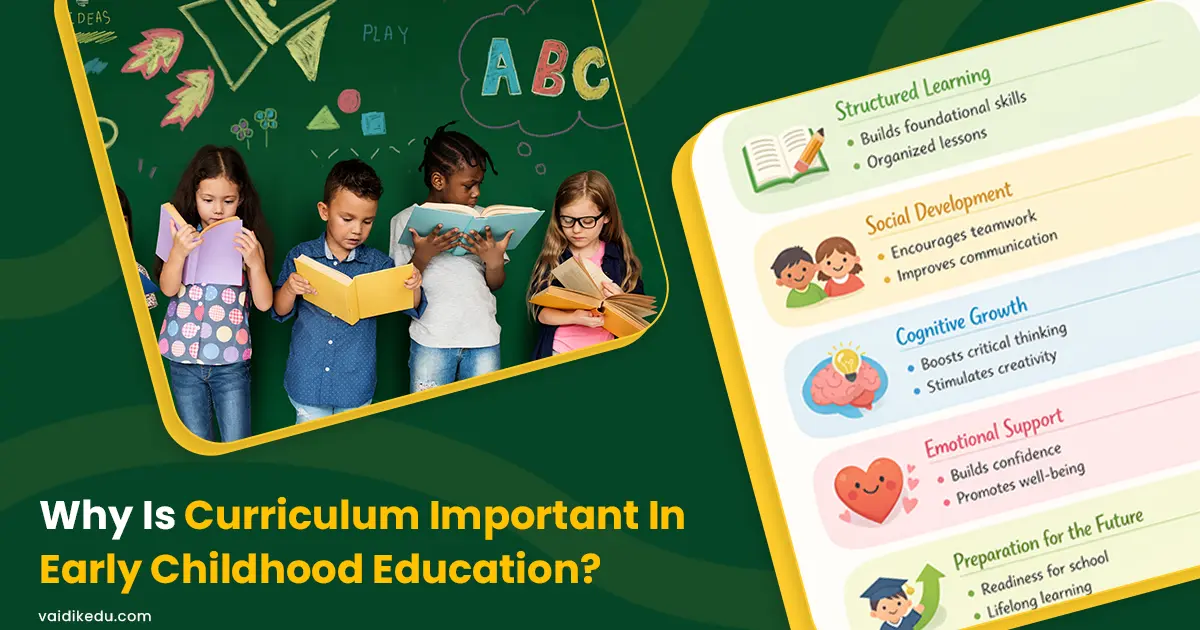
Traditional curricula can fail to address modern academic, technological, and workforce requirements, leaving students less prepared for the future. At the same time, overreliance on rote learning can limit opportunities for creativity, critical thinking, problem-solving, and practical application.
Schools and education providers can use curriculum development services to review existing programs, align learning objectives with current requirements, and create more engaging and future-ready learning experiences.
How To Overcome Outdated Curriculum Challenges
Curriculum Reform: Integrate digital literacy, life skills, critical thinking, environmental education, and other relevant skills into the curriculum.
Student-Centered Learning: Emphasize activities, projects, problem-solving, collaboration, and real-world applications rather than relying primarily on memorization.
Continuous Feedback: Teachers and curriculum teams should regularly evaluate learning outcomes and update teaching approaches based on student needs, educational research, and emerging trends.
4. Teacher Shortages And Burnout
Teachers are the first and foremost resources in education, and many countries, however, do face a tremendous shortage of quality instructors. Overburdening is one of the root causes of their burnout leading to the fall in quality in teaching.
How To get over This scenario:
Competitive Salaries: Governments must provide proper pay and allowance to attract capable teachers.
Professional Development: Through regular training camps, teachers get updated with all the latest approaches in teaching methods.
Work-Life Balance: Schools should develop policies that decrease administrative burden and support teachers’ mental health.
5. Student
Mental Health Issues
The rising number of students’ mental health issues are a very serious issue. The key contributors include high academic pressure, the influence of social media, and lack of emotional empowerment all causing anxiety and depression and eventually burnout.
How To Overcome:
Counseling Services: Providing access to trained counselors can help students address their issues.
A Supportive Environment: Teachers and parents should enable the students to enjoy open communication for seeking help when in need.
6. Lack of Funds
Resource, infrastructure, and trained human resource constraints result in decreased quality education. The worst-hit public schools are found in poor backgrounds.
How to Overcome:
More Allocation of Budget: Governments should increase the budget on education.
Public And Private-Public Sector Partnership: Public and private sectors provide added resources.
Community Input: Communities can raise funds and participate as volunteers.
7. Change Resistance
The education system often resists change based on bureaucratic issues, ignorance of the new idea, or fear of altering prevailing sources. This creates a stale environment where innovation and development are not triggered.
How To Overcome
Stakeholder Engagement: Involving teachers, students, and parents in decision-making processes.
Pilot Programs: Introduce new programs in a small-scale setting before expanding them.
Awareness Campaigns: Instruct the stakeholders about the positive impacts of the proposed changes and win them over.
8. Bullying And Discrimination
Bullying and discrimination against race, gender, or class may make the learning environment hostile and influence the mental well-being and performance of the students in the study.
Overcoming Bullying And Discrimination:
Zero-Tolerance Policies: The school should have very strict policies regarding bullying and help victims.
Inclusive Education: Teach and promote awareness of diversity and inclusion through various awareness programs and workshops.
Monitoring Systems: Regular monitoring of school environments to identify issues early enough.
9. Global Crises And Natural Disasters
Pandemics, wars, and natural disasters affect the education system; therefore, schools have to close down or opt for online learning in a crisis.
How to Overcome:
Preparedness Plans: Prepared contingency plans for continuation of education during crises
Technological Advancement: Arm the schools with technologies that can ensure a smooth shift to online classes
Global Collaboration: Groom cooperation at global levels to tackle the massive disasters leading to educational dislocations.
10. Learning Gaps and Learning Loss
Learning gaps remain one of the most important challenges facing education systems. Students do not always progress at the same pace, and disruptions to schooling, differences in educational resources, socioeconomic conditions, and unequal access to academic support can make existing gaps even wider.
The World Bank has highlighted the global learning crisis, with approximately 70% of children in low- and middle-income countries unable to read and understand a simple age-appropriate text by age 10.
Learning gaps can affect students well beyond a single school year. When foundational skills in reading, mathematics, science, or language are not developed properly, students may struggle with increasingly complex concepts in later grades.
How Can Schools Reduce Learning Gaps?
Early Assessment: Regular diagnostic and formative assessments can help teachers identify learning difficulties before they become larger problems.
Targeted Support: Small-group instruction, personalized learning, tutoring, and additional practice can help students address specific areas of weakness.
Personalized Learning Resources: Digital learning platforms and adaptive resources can provide students with content that matches their current level.
Continuous Monitoring: Schools should regularly evaluate student progress and adjust interventions based on learning outcomes.
11. Artificial Intelligence in Education
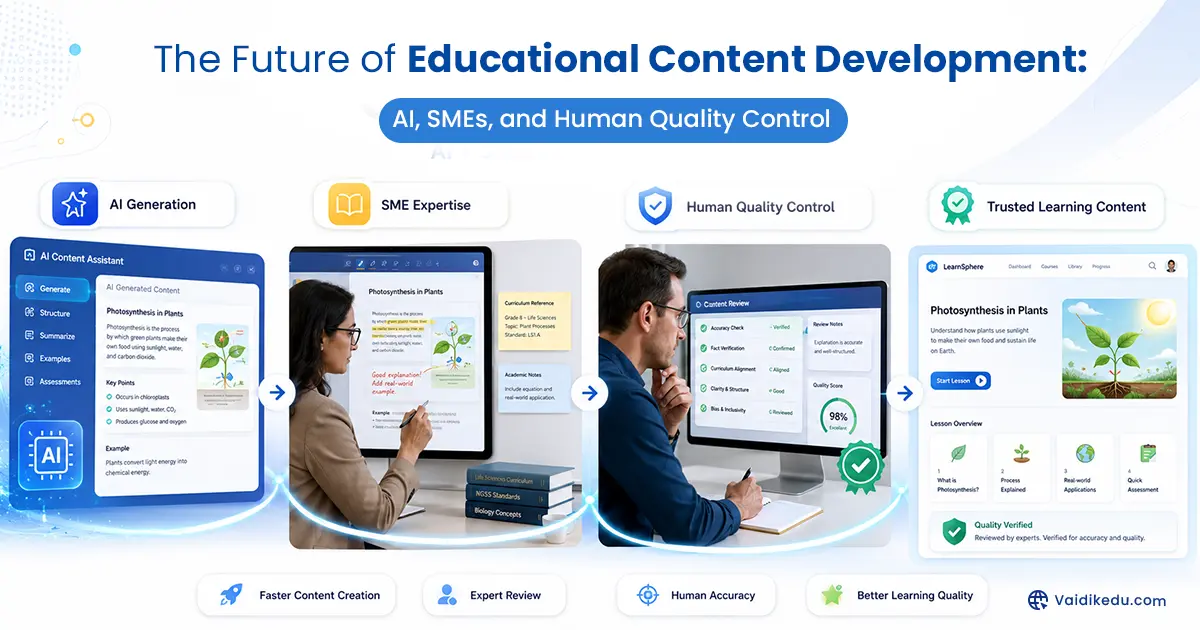
Artificial intelligence is transforming education in 2026. Generative AI tools can support lesson planning, tutoring, content creation, research, assessment, and personalized learning.
However, the rapid adoption of AI also creates new challenges. Schools and educators must address academic integrity, inaccurate AI-generated information, student dependence on technology, bias, data privacy, and appropriate classroom use.
The OECD’s Digital Education Outlook 2026 highlights the growing role of generative AI in education and the importance of using technology in ways that support effective teaching and learning.
How Can Schools Use AI Responsibly?
Create Clear AI Policies: Schools should establish clear guidelines explaining when and how students and teachers can use AI.
Train Teachers: Educators need practical training to understand AI tools, their limitations, and responsible classroom applications.
Protect Student Data: Schools should carefully evaluate how AI platforms collect, store, and process student information.
Maintain Human Oversight: AI should support teachers rather than replace human judgment, interaction, and educational expertise.
Teach AI Literacy: Students should learn how to verify AI-generated information, identify potential errors, and use AI ethically.
12. Student Engagement and Motivation
Maintaining student engagement is another major challenge for modern education. Students are surrounded by digital entertainment, social media, short-form content, and constant information, making it increasingly important for classroom learning to be relevant and interactive.
Low engagement can lead to reduced participation, poor academic performance, and higher dropout risks.
How Can Schools Improve Student Engagement?
Interactive Learning: Activities, discussions, simulations, projects, and real-world examples can make lessons more engaging.
Student-Centered Instruction: Giving students opportunities to make choices and participate actively can increase ownership of learning.
Relevant Content: Connecting academic concepts to real-world situations can help students understand why the subject matters.
Technology Integration: Educational technology can provide interactive experiences when it is used purposefully rather than simply replacing traditional materials.
13. Assessment and Standardized Testing Challenges
Assessment is essential for measuring student progress, but traditional examinations do not always capture the full range of skills students need.
Standardized tests can measure academic knowledge effectively, but skills such as creativity, communication, collaboration, critical thinking, and practical problem-solving may require different assessment approaches.
How Can Assessment Be Improved?
Use Multiple Assessment Methods: Schools can combine examinations with projects, presentations, portfolios, practical activities, and formative assessments.
Focus on Learning Progress: Assessment should help teachers understand what students know, where they struggle, and what support they need next.
Provide Frequent Feedback: Timely feedback can help students correct misunderstandings before they become persistent learning problems.
Use Technology Carefully: Digital assessment tools can help analyze learning data, but results should be interpreted by qualified educators.
14. Future Skills and the Education-to-Work Gap
Technology and changing industries are creating new expectations for graduates. Students need strong academic foundations, but they also need transferable skills that can help them adapt to changing career environments.
Communication, critical thinking, digital literacy, creativity, collaboration, problem-solving, and information literacy are increasingly important across industries. Effective instructional design services can help education providers structure learning experiences that develop these skills while keeping lessons aligned with clear learning objectives.
How Can Education Prepare Students for the Future?
Modernize Curriculum: Curriculum should be regularly reviewed to reflect changes in technology, society, and employment.
Develop Transferable Skills: Students should have opportunities to practice problem-solving, communication, teamwork, research, and critical thinking.
Connect Learning With Real-World Applications: Projects and practical activities can help students understand how academic knowledge is applied outside the classroom.
Strengthen Digital Literacy: Students should learn how to use technology effectively, safely, and responsibly.
15. Data Privacy and Cybersecurity in Education
As schools increasingly use online learning platforms, student information systems, educational applications, AI tools, and digital assessments, protecting student data has become a major responsibility.
Educational institutions may handle sensitive information about students, families, teachers, academic performance, and school operations. Poor cybersecurity practices can expose this information to unauthorized access or misuse.
How Can Schools Protect Educational Data?
Minimize Data Collection: Schools should collect only the information necessary for legitimate educational purposes.
Use Secure Platforms: Education providers should evaluate the security and privacy practices of technology vendors before adopting their platforms.
Control Access: Sensitive information should only be accessible to authorized users.
Train Staff and Students: Cybersecurity awareness should be part of digital education for teachers, administrators, and students.
Review Technology Regularly: Schools should periodically evaluate their digital tools, security practices, and privacy policies.
Way Ahead
How Can Education Systems Address These Challenges?
The challenges facing education cannot be solved by a single technology, policy, or institution. Sustainable improvement requires cooperation between governments, schools, teachers, parents, students, technology providers, and education organizations.
Several approaches can help education systems become more effective and adaptable.
Invest in Teachers
Teachers remain central to successful education. Providing professional development, reducing unnecessary administrative workloads, improving access to teaching resources, and supporting teacher well-being can strengthen both teacher retention and classroom outcomes.
Use Data to Identify Learning Needs
Schools can use assessments and learning data to identify where students are struggling. Early identification allows educators to provide targeted support before learning gaps become more difficult to address.
Expand Personalized Learning
Students have different strengths, weaknesses, learning speeds, and educational needs. Adaptive learning technologies and personalized academic support can help provide students with resources that are more closely aligned with their individual learning requirements.
Modernize Curriculum and Instructional Design
Curriculum should evolve as academic, technological, and workforce requirements change. Effective instructional design can help educators organize learning experiences around clear objectives, engaging content, appropriate assessments, and measurable outcomes.
Adopt Artificial Intelligence Responsibly
AI can support teachers and students through personalized learning, content development, tutoring, assessment support, and administrative automation. However, schools need clear policies, teacher training, data protection, and human oversight to ensure responsible adoption.
Strengthen Digital Access
Technology can expand educational opportunities, but only when students have meaningful access to devices, connectivity, digital resources, and the skills needed to use them. Schools should consider both online and offline learning options when addressing digital inequality.
Prioritize Student Well-Being
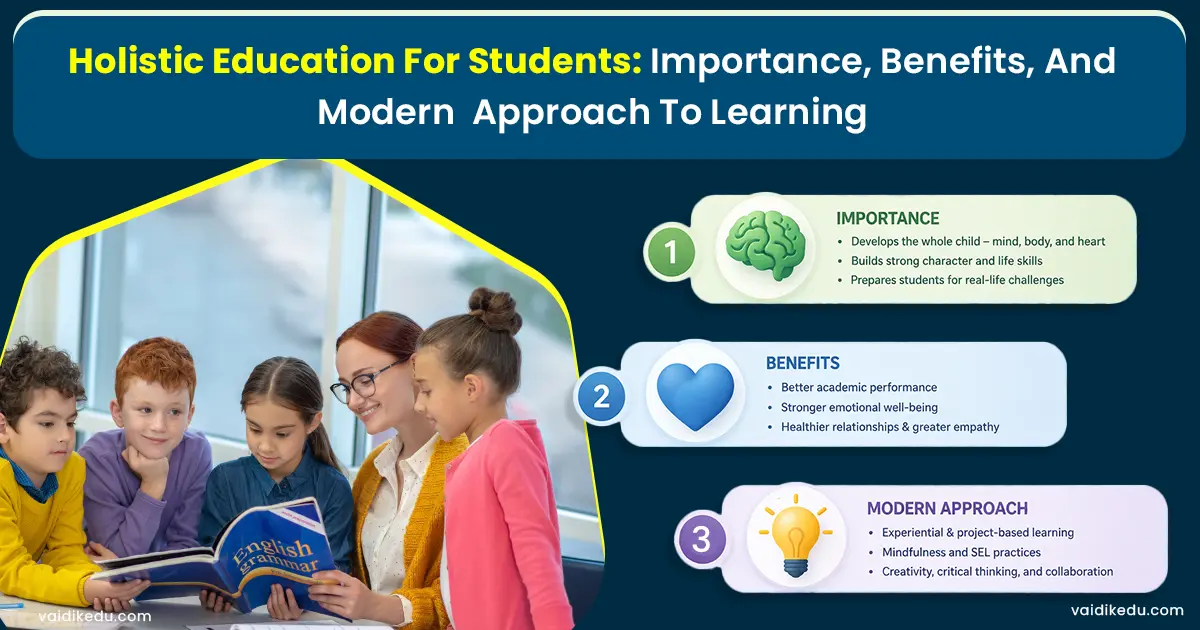
Academic success depends partly on students feeling safe, supported, and able to participate in learning. Schools should integrate appropriate mental health support, positive classroom environments, and open communication into their broader educational strategies.
Build Flexible and Resilient Education Systems
Education systems should be prepared for disruptions caused by natural disasters, health emergencies, conflict, or other crises. Flexible learning models and digital infrastructure can help maintain educational continuity when traditional classrooms are unavailable.
Ultimately, the future of education will depend on how effectively institutions combine qualified educators, modern curriculum, responsible technology, personalized learning, and evidence-based instructional strategies.
Education Challenges in the United States
The United States faces many of the same education challenges experienced globally, but several issues have particular importance within the American education system. Teacher shortages, achievement gaps, student mental health, technology access, curriculum relevance, education funding, and the responsible adoption of artificial intelligence continue to influence K–12 education.
Teacher recruitment and retention are significant concerns in many parts of the country. At the same time, differences in educational resources between communities can contribute to unequal learning opportunities.
The growth of AI is creating another major shift. Schools across the United States are considering how students and teachers should use generative AI while maintaining academic integrity, protecting student data, and ensuring that technology supports rather than replaces meaningful learning.
Addressing these challenges requires a combination of effective teaching, curriculum development, targeted academic support, responsible technology adoption, and investment in educators and students.
The same principles can also apply internationally, although individual education systems will need solutions that reflect their local economic, cultural, technological, and policy environments.
Conclusion
Education in 2026 is facing a combination of long-standing and emerging challenges. Unequal access, teacher shortages, learning gaps, funding limitations, student mental health, digital inequality, outdated curricula, AI adoption, assessment limitations, and changing workforce expectations are influencing education systems around the world.
These challenges are complex, but they also create opportunities for meaningful improvement. Schools and education providers can respond by investing in teachers, modernizing curriculum, using technology responsibly, providing personalized learning support, strengthening student well-being, and developing more flexible approaches to teaching and assessment.
The goal should not simply be to introduce more technology into education. Instead, technology should be combined with strong pedagogy, effective instructional design, qualified educators, and evidence-based strategies to create learning experiences that are accessible, engaging, personalized, and effective.
As education continues to evolve, organizations that can adapt to changing learner needs while maintaining strong educational foundations will be better prepared to support students and educators in the future.
Frequently Asked Questions
The biggest challenges in education in 2026 include teacher shortages, learning gaps, unequal access to quality education, student mental health concerns, digital inequality, outdated curricula, artificial intelligence, student engagement, assessment limitations, funding gaps, and data privacy.
There is no single challenge affecting every education system. However, unequal access to quality education, teacher shortages, learning gaps, technology access, and the need to adapt education to artificial intelligence and changing workforce requirements are among the most significant challenges.
Technology can improve access to learning resources, personalized instruction, collaboration, assessment, and digital learning. However, unequal access to devices and internet connectivity, teacher training requirements, cybersecurity, data privacy, and inappropriate technology use can create additional challenges.
AI creates challenges related to academic integrity, inaccurate information, student dependency, data privacy, bias, and teacher preparedness. Schools need clear AI policies and appropriate teacher and student training to ensure that AI is used responsibly.
Schools can reduce learning gaps through regular assessments, targeted interventions, personalized learning, small-group instruction, tutoring, additional practice, and continuous monitoring of student progress.
Teacher shortages can increase class sizes, place additional pressure on existing teachers, reduce access to specialized instruction, and make it more difficult for schools to provide consistent learning support. Improving teacher recruitment, retention, professional development, and working conditions can help address the problem.
Schools can improve student engagement through interactive lessons, project-based learning, real-world applications, student-centered instruction, appropriate educational technology, collaborative activities, and personalized academic support.